Contributors: Stephanie Brown, Jennifer Hagen, Josey Keener, and Natasha Parks
As 2025 comes to a close and 2026 awaits, there’s no better moment to level up your home kitchen food safety habits. Explore our top five expert tips to help you prepare every meal with greater confidence and peace of mind in the year ahead.
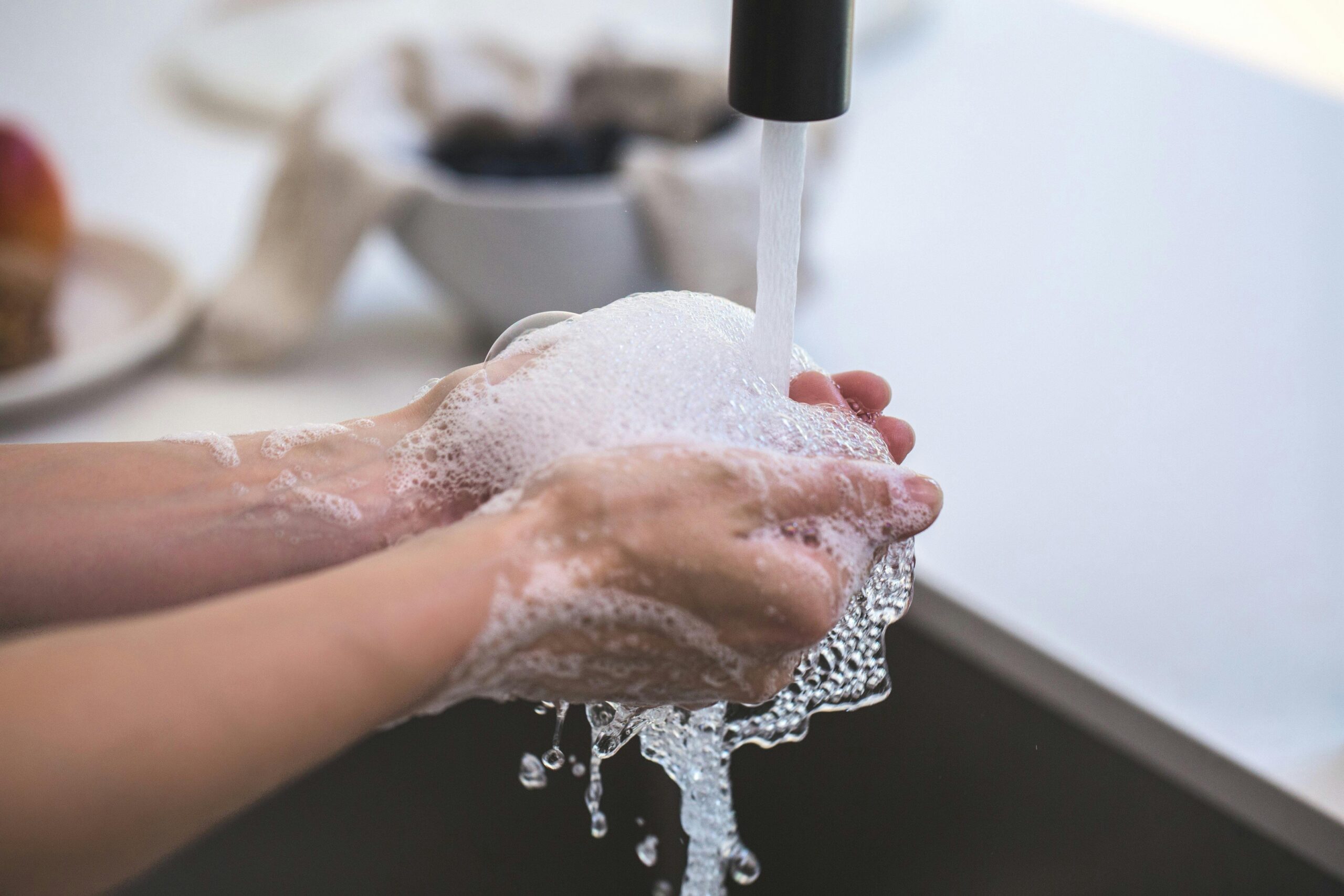
- Wash Hands, Clean, and Sanitize: The holidays bring gatherings and plenty of food, whether from parties, potlucks, or gifts. Now’s the perfect time to wash your hands often and focus on food safety. Organize, clean, and sanitize your kitchen and food storage areas, so you’re ready for extra treats and leftovers.
In the home, using a four-step method for cleaning and sanitizing is recommended. They are 1) pre-rinse; 2) clean with detergent; 3) rinse; and 4) apply a sanitizer (Stone et al., 2020). If you skip steps, like using a sanitizer on dirty surfaces, this wastes product and doesn’t keep you safe. This is because the dirt and food debris on a dirty surface can bind to the active ingredients in many sanitizers, thereby preventing the sanitizer from reaching any foodborne pathogens present on these surfaces. When prioritizing which surfaces need to be cleaned and sanitized, consider the following:
- Keep your cell phone out of the kitchen and remember to clean and sanitize it regularly – phones carry a surprising number of microorganisms!
- Refrigerators, freezers, or any other cold storage areas. This includes shelving, drawers, and walls inside of the unit(s).
- Surfaces in storage and preparation areas including countertops, sinks, and shelves.
- Common touch points such as light switches, knobs for stoves, and handles on doors, cabinetry, and equipment (e.g., microwave, refrigerator, and dishwasher).
- If using reusable bags as part of your shopping habits, don’t forget to clean these as well. General sanitation tips to consider: Not all sanitizers should be used on surfaces that touch foods (i.e., food contact surfaces). Reading a sanitizer’s EPA approved label will tell you if a product is approved for food contact uses. To learn more about sanitizer basics, we recommend reviewing Stone et al., 2020. While this article was written with the food industry in mind, many of these concepts and tips can be applied to home settings.
- Separate Don’t Cross-Contaminate: Reducing opportunities for cross-contamination to occur begins with bringing ingredients and food into your home. Many food items are stored in the refrigerator, including ready-to-eat items (such as leftovers and most dairy products), raw produce, meats, and more. These items can cause cross-contamination issues if not stored separately, particularly if they can spill or otherwise comingle with different food types.
Another best practice is to store items that are thawing in a refrigerator in a secondary container to prevent dripping onto other foods (Ahn et al., 2021). For example, raw meats should be thawed in a clean bin or plate to prevent liquids from dripping onto ready-to-eat foods (e.g., lettuce intended for salad). Using a secondary container can also be a great way to separate items of different types if you cannot dedicate whole refrigerator shelves to similar food types.
- Use the Right Tools for the Right Job: Having the right tool, utensil, or piece of equipment to support food handling and storage can help keep your food safer and may make tasks easier to accomplish. To best explain, let’s use a food thermometer as an example. From monitoring refrigerator and freezer temperatures to checking the internal temperatures of foods, having thermometers can help determine whether foods have maintained or reached a safe temperature. However, having a thermometer is only one piece of the puzzle. If the thermometer will not measure the intended temperature range, it is hard to use or clean, is breakable, hard to calibrate, or not made of food grade materials, then this thermometer is not the right tool for this job.
Every so often, tools and equipment should be reviewed to see if they need to be replaced. Items that commonly need to be replaced because they are difficult to clean due to wear and tear include silverware, can openers, cutting boards, and cooking utensils.
- Times and Temperatures Matter: Many foods require holding or storage at a specific temperature range for a given timeframe to maintain their safety (i.e., time/temperature controlled for safety (TCS) foods). Instead of giving the gift of foodborne illness this holiday season and beyond, consider these practical tips:
- Do not rely on visual clues alone for determining a food’s safety. Always store perishable foods and leftovers promptly, and cook foods to their recommended internal temperature, which should be measured using a food thermometer. The USDA’s safe minimum internal temperature chart can be found in Table 1(USDA, 2025b). The maximum recommended time that foods should be kept out of the temperature danger zone (40ºF – 140ºF) is two hours. If working in temperatures above 90ºF, this time frame shortens to one hour (USDA, 2020).
- Don’t forget about the temperature danger zone when it comes to traveling with or hosting events with perishable foods. Consider using insulated containers/coolers or food warmers to keep foods at a safe temperature.
- If you can’t finish leftovers in three to four days (USDA, 2020), consider freezing them to keep them safe. Using labels or stickers on your food containers are great reminders for what the safe storage time should be. You can also repurpose leftovers into new meals like soup, salads, casseroles, and more! Planning ahead saves money, reduces food waste, and helps prevent illness.
- Food delivery is more popular than ever. Whether it’s delivering homemade treats to friends or ordering meals and meal kits right to your door, temperature is an important consideration, especially if living in warmer climates. Where possible, consider using coolers or other insulated devices to help keep perishable foods at a safe temperature.
- Food Date Labels and Waste: When was the last time you checked the back of your fridge, pantry, or cabinets for forgotten foods and spices? Items left or pushed to the back can spoil, leading to unnecessary waste. Spoiled foods tend to have an unpleasant smell, taste, or other sensory properties that indicate a food has changed. This can happen at any time during a food’s shelf life, regardless of the date-based label associated with the product. It is important to remember that the microorganisms responsible for food spoilage are not the same as those that make us sick (i.e., pathogens). However, if food is spoiled, it means conditions have allowed all types of bacteria, including harmful ones, to multiply. Therefore, for safety’s sake, we recommend throwing out any spoiled foods to help protect yourself and others from possible foodborne illness.
Along with spoilage, date-based labeling has been commonly used when making decisions about discarding foods. A 2025 food label survey demonstrated that the percentage of consumers relying on date-based labeling for decision making is on the rise (43% versus 37% in 2016; Neff et al., 2025). However, relying solely on date-based labeling leads to extra food waste and money loss for consumers. The 2019 EPA estimates for wasted food from food retail, food service, and residential sources reached 66.2 million tons (EPA, 2023). Of this, 40% was attributed to home use (EPA, 2023). The only food requiring date-based labels in the U.S. is infant formula (USDA, 2025a). The “use-by” date for this product is the final date that a manufacturer can guarantee the nutritional value and quality of this food (21 CFR 107). While most other foods contain date labels, these terms are unregulated, not standardized across the industry, and are typically used by companies to refer to a food’squality attributes, not safety.
Table 1: Safe Minimum Internal Temperature Chart from USDA.
| Product | Minimum Internal Temperature and Rest Time |
| Beef, Pork, Veal and Lamb Steaks, Chops and Roasts | 145 degrees F (62.8 degrees C) and allow to rest at least 3 minutes |
| Ground Meats | 160 degrees F (71.1 degrees C) |
| Ground Poultry | 165 degrees F (73.9 degrees C) |
| Ham, Fresh or Smoked (Uncooked) | 145 degrees F (62.8 degrees C) and allow to rest at least 3 minutes |
| Fully Cooked Ahm (to Reheat) | Reheat cooked hams packaged in USDA- Inspected plants to 140 degrees F (60 degrees C) and all others to 165 degrees F (73.9 degrees C) |
| All Poultry (Breasts, Whole Bird, Legs, Thighs, Wings, ground Poultry, Giblets and Stuffing) | 165 degrees F (73.9 degrees C) |
| Eggs | 160 degrees F (71.1 degrees C) |
| Fish & Shellfish | 145 degrees F (62.8 degrees C) |
| Leftovers | 165 degrees F (73.9 degrees C) |
| Casseroles | 165 degrees F (73.9 degrees C) |
*Table is from USDA’s Safe Minimum Internal Temperature Chart webpage (USDA, 2025b).
References:
Ahn, S., Lepper, J. A., and Schneider, K. (2021). Food safety tips for the holiday season. University of Florida Institute of Food and Agriculture Extension, FSHN14-13. Available at: https://edis.ifas.ufl.edu/publication/FS260
Environmental Protection Agency (EPA) (2023). 2019 Wasted food report: Estimates of generation and management of wasted food in the United States in 2019. Available at: https://www.epa.gov/system/files/documents/2024-04/2019-wasted-food-report_508_opt_ec_4.23correction.pdf
Etaka, C. A., McEntire, E., and Strawn, L. K. (2024). Best practices for reusable grocery bags. Virginia Cooperative Extension Publications, FST-476NP. Available at: https://www.pubs.ext.vt.edu/FST/fst-476/fst-476.html.
Federal Communications Commission (FCC) (2020). How to sanitize your phone and other devices. Available at: https://www.fcc.gov/consumers/guides/how-sanitize-your-phone-and-other-devices.
Food and Drug Administration (FDA) (2025). Questions and answers regarding food allergens, including the food allergen labeling requirements of the federal Food, Drug, and Cosmetic Act (edition 5): Guidance for industry. Available at: https://www.fda.gov/media/117410/download.
Mafe, A. N., Edo, G. I., Makia, R. S., Joshua, O. A., Akpoghelie, P. O., Gaaz, T. S., Jikah, A. N., Yousif, E., Isoje, E. F., Igbuku, U. A., Ahmed, D. S., Essaghah, A. E. A., and Umar, H. (2024): A review on food spoilage mechanisms, foodborne diseases and commercial aspects of food preservation and processing. Food Chemistry Advances, 5: 100852.
Neff, R., Broad Leib, E., Khan, A., and Gunders, D. (2025). Consumer perceptions of food date labels: 2025 national survey. Available at: https://chlpi.org/wp-content/uploads/2024/07/Consumer-perceptions-of-food-date-labels-2025-national-survey-policy-brief.pdf.
Olsen, M., Campos, M., Lohning, A., Jones, P., Legget, J., Bannach-Brown, A., McKirdy, S., Alghafri, R., and Tajouri, L. (2020). Mobile phones represent a pathway for microbial transmission: A scoping review. Travel Medicine and Infectious Disease, 35:101704.
Stone, D., Kovacevic, J., and Brown, S. (2020). Sanitizer basics for the food industry. Pacific Northwest Extension Publishing, PNW 752. Available at: https://extension.oregonstate.edu/catalog/pnw-752-sanitizer-basics-food-industry
United States Department of Agriculture (USDA), Food Safety and Inspection Service (2020). Leftovers and food safety. Available at: https://www.fsis.usda.gov/food-safety/safe-food-handling-and-preparation/food-safety-basics/leftovers-and-food-safety.
USDA, Food Safety and Inspection Service (2025a). Food product dating: https://www.fsis.usda.gov/food-safety/safe-food-handling-and-preparation/food-safety-basics/food-product-dating
USDA, Food Safety and Inspection Service (2025b). Safe minimum internal temperature chart. Available at: https://www.fsis.usda.gov/food-safety/safe-food-handling-and-preparation/food-safety-basics/safe-temperature-chart.
Brown, Stephanie, Jennifer Hagen, Josey Keener, and Natasha Parks. “Top Five Food Safety and Quality New Year’s Resolutions for 2026.” Southern Ag Today 5(52.5). December 26, 2025. Permalink
