
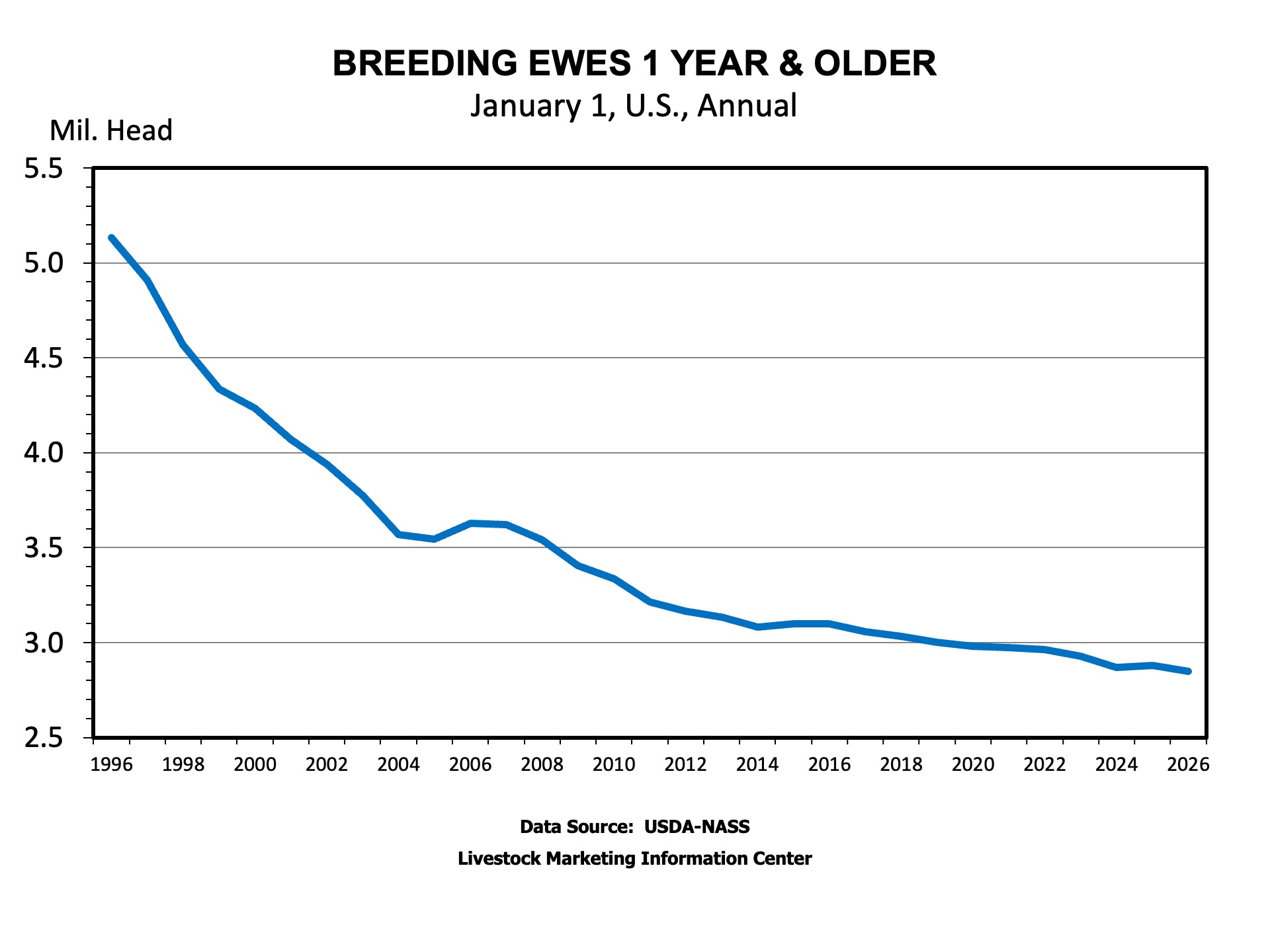
USDA released its annual sheep inventory report at the end of January, along with the cattle inventory report, as discussed in an earlier article. The report indicated that the slow decline in sheep numbers continued for another year, but there was some flock growth in a few states.
The ewe flock in the U.S. declined one percent to 2.85 million head, but eight states reported growth. Iowa, Colorado, Indiana, Michigan, Kansas, New York, and West Virginia reported slightly larger ewe flocks, but the biggest growth occurred in Texas, where the ewe flock grew 3.7 percent, or 15,000 head. Texas has seen growing sheep numbers related to grazing solar panel areas and some growth in supplying lamb to non-traditional markets. In the rest of the South, Tennessee and Virginia reported small, 1,000 head declines in their ewe flocks while Kentucky held steady with 42,000 ewes. Texas remained the largest sheep-producing state with 420,000 ewes.
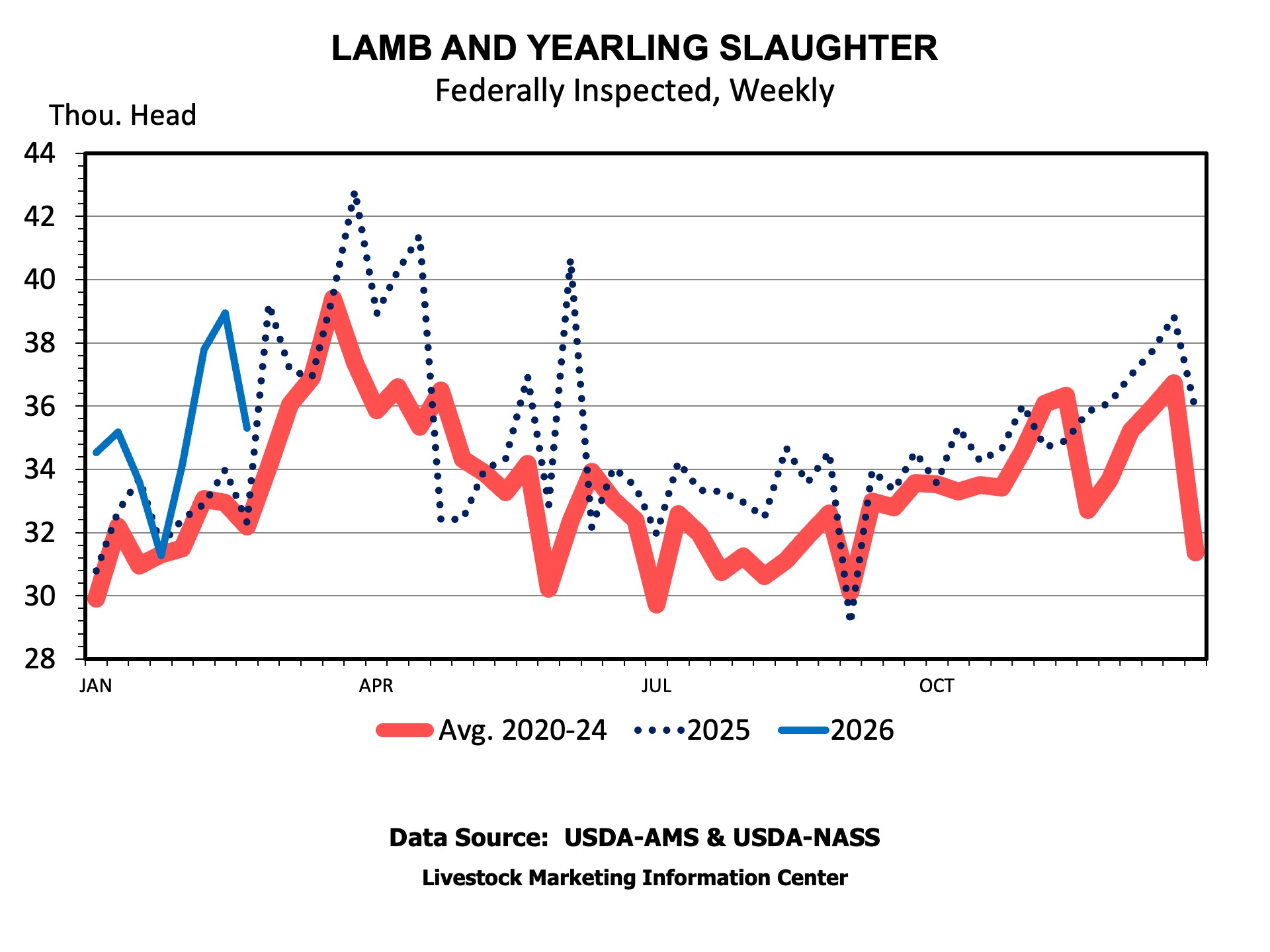
While the ewe flock was smaller, the market lamb inventory on January 1 was 1.2 percent larger than the previous year, suggesting that a few more lambs may go to market in the early part of 2026. Lamb production normally peaks in the Spring, with spring-time holiday-driven demand. With Easter falling on April 5th this year, some movement of lambs to market has already occurred. Lamb and yearling slaughter is up 4.4 percent this year compared to 2025.
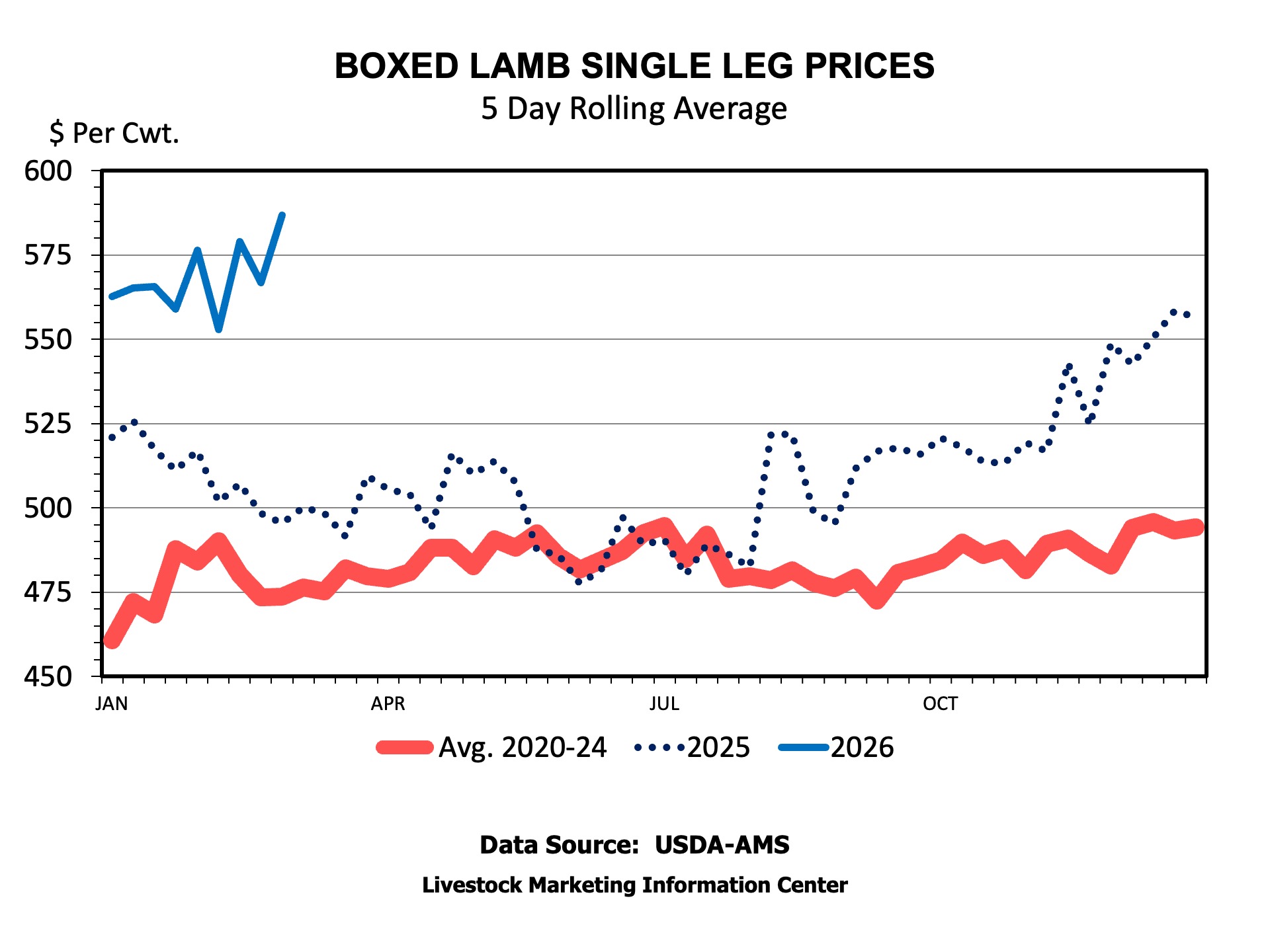
Lamb prices have been well above year-ago levels throughout 2026. In San Angelo, Texas, 60-90 pound wool slaughter lambs averaged $414 per cwt in mid-March 2026, while hair sheep of the same weight averaged $423 per cwt. A year ago, prices were averaging about $311 per cwt. The auction market in New Holland, Pennsylvania, is a closely watched market for many producers in the South and is often used to gauge the non-traditional East Coast market. For the week of March 13, 2026, 60-90 pound slaughter lambs averaged $426 per cwt compared to $352 per cwt last year.
Lamb meat prices are also well above last year’s. Leg of lamb at wholesale was reported by USDA to be $5.87 per cwt compared to $5.00 last year at this time. Medium racks were $12.67 per cwt compared to $10.00 per cwt last year.
There is ample evidence of lamb demand growth based on grocery store sales prices and volumes. It appears lamb is sharing in the protein consumption trend along with beef and other meats. That growth may need to continue if prices will be supported at these levels.
Anderson, David. “A Small Decline in Sheep Numbers.” Southern Ag Today 6(12.2). March 17, 2026. Permalink
