
Southern wheat producers are experiencing significant losses this year due to low prices, weather conditions, and a shortage of stockers for grazing. To maximize returns or minimize losses, farmers must evaluate whether producing wheat for grain, grazing, or hay is most financially viable under current market and production conditions.
We have a Wheat and Small Grains Decision Aid (Link) to help farmers decide whether to use wheat for grain, grazing, or baling. To make an informed choice, compare the prices of grazing, wheat hay, and grain, expected yields, production costs, crop rotation options, available equipment, and insurance coverage. What follows is an example analysis with basic assumptions, check out the decision aid to include your operation-specific data.
Although all alternatives show negative returns this year, hay production continues to offer higher profits under similar conditions. In this example, baling hay is more favorable due to lower wheat grain prices. Actual results will depend on your wheat bale prices and may vary if you own harvesting or baling equipment.
Grazing is also more favorable if farmers were able to graze wheat early, have sufficient moisture and forage, and enough livestock to maximize beef production.
The decision aid enables you to compare alternatives from both economic and financial perspectives. Analyzing cash flow helps identify the most advantageous option, particularly if you own a combine or hay baling equipment.
You can also use this information to determine the hay sale price needed to match wheat grain profit margins or to set an appropriate grazing price. The Decision Aid uses your data and costs to calculate breakeven prices for hay and grazing (see Graphs 1 and 2).
Graph1: Break-Even Hay Prices
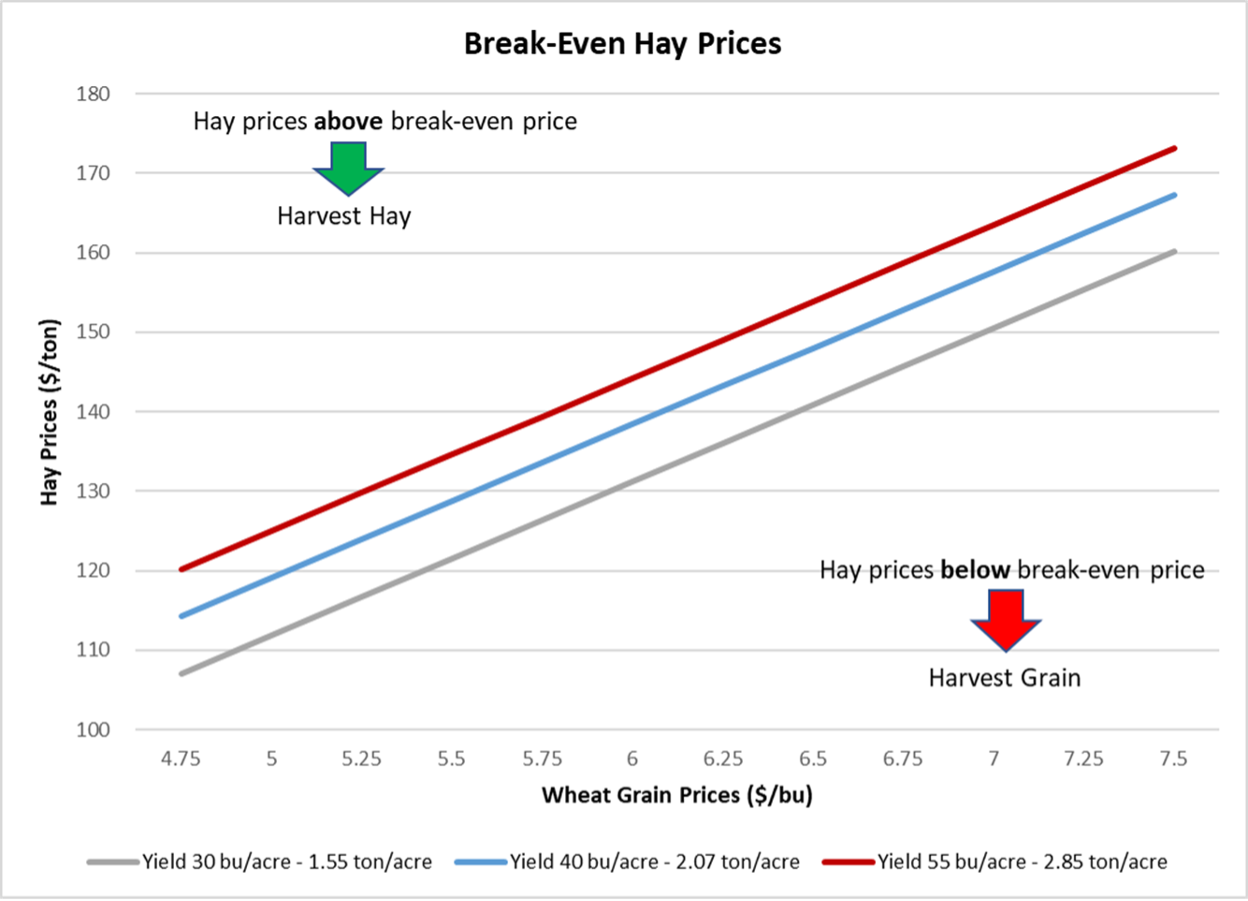
Consider baling wheat if you can sell hay above the breakeven price, based on current wheat prices and expected yields. For example, with a yield of 40 bushels per acre at $5 per bushel, baling is preferable only if the net price per ton of hay exceeds $119, assuming 76% of the estimated biomass or 2.07 tons per acre.
Graph 2. Breakeven Grazing Prices
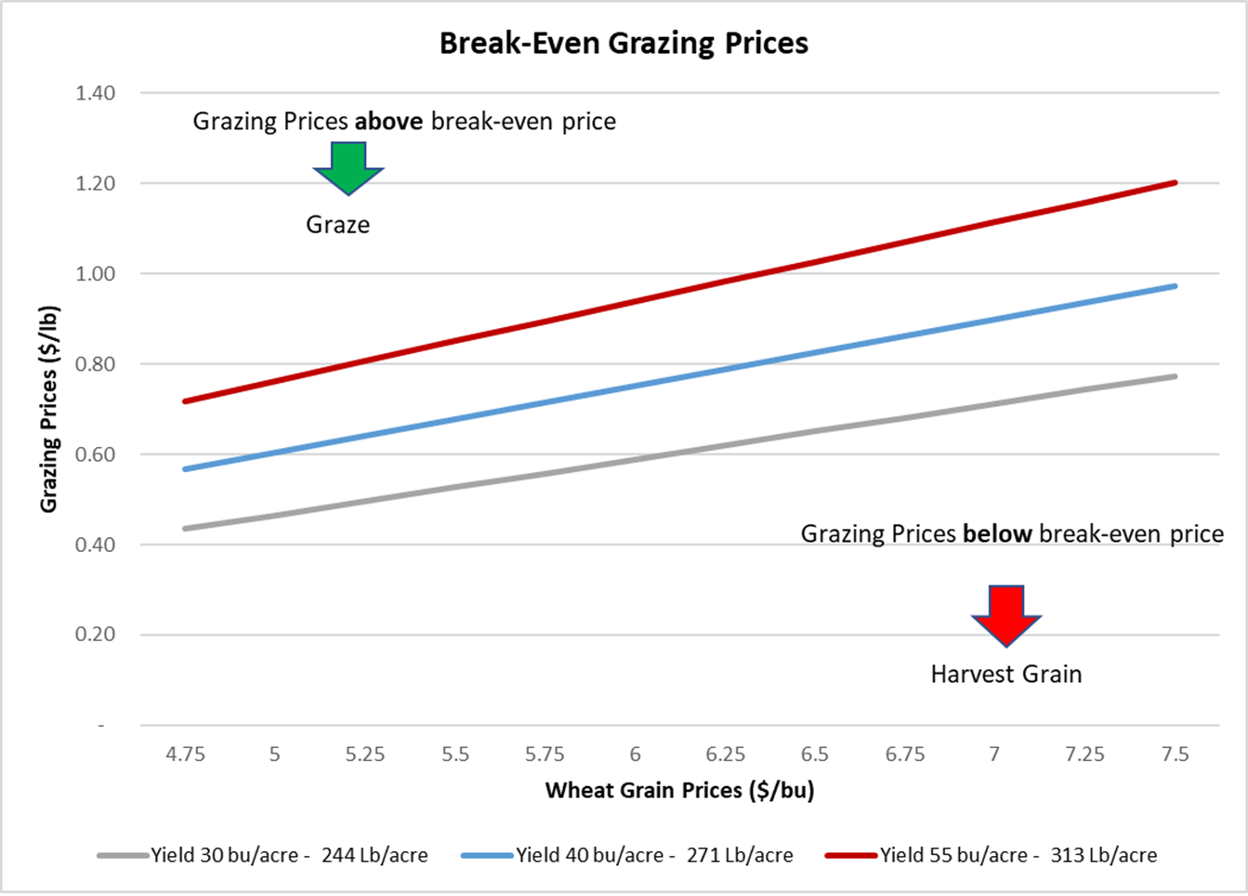
Similarly, with a yield of 40 bushels per acre at $5 per bushel, grazing is advisable only if the grazing price exceeds $0.60 per pound of gain.
With low wheat prices, alternatives such as grazing or hay production may provide better financial outcomes. The Wheat and Small Grain Decision Aid (Link) is designed to help farmers evaluate these options. Using your own data on yields, prices, and costs is essential for effective analysis. If you need assistance with the decision aid, please let us know.
Abello, Pancho. “Analyzing Wheat Alternatives in the South.” Southern Ag Today 6(7.1). February 9, 2026. Permalink
