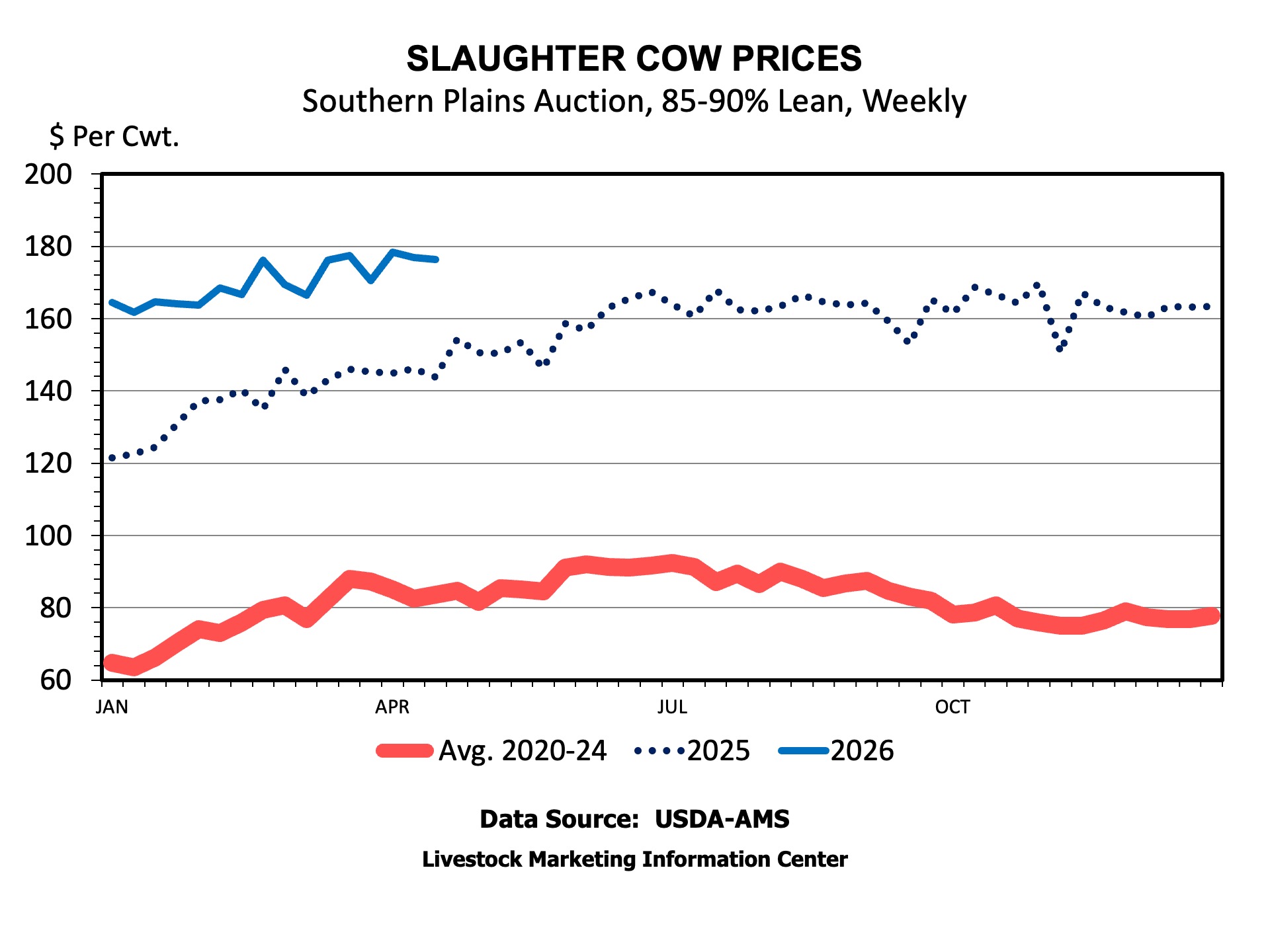
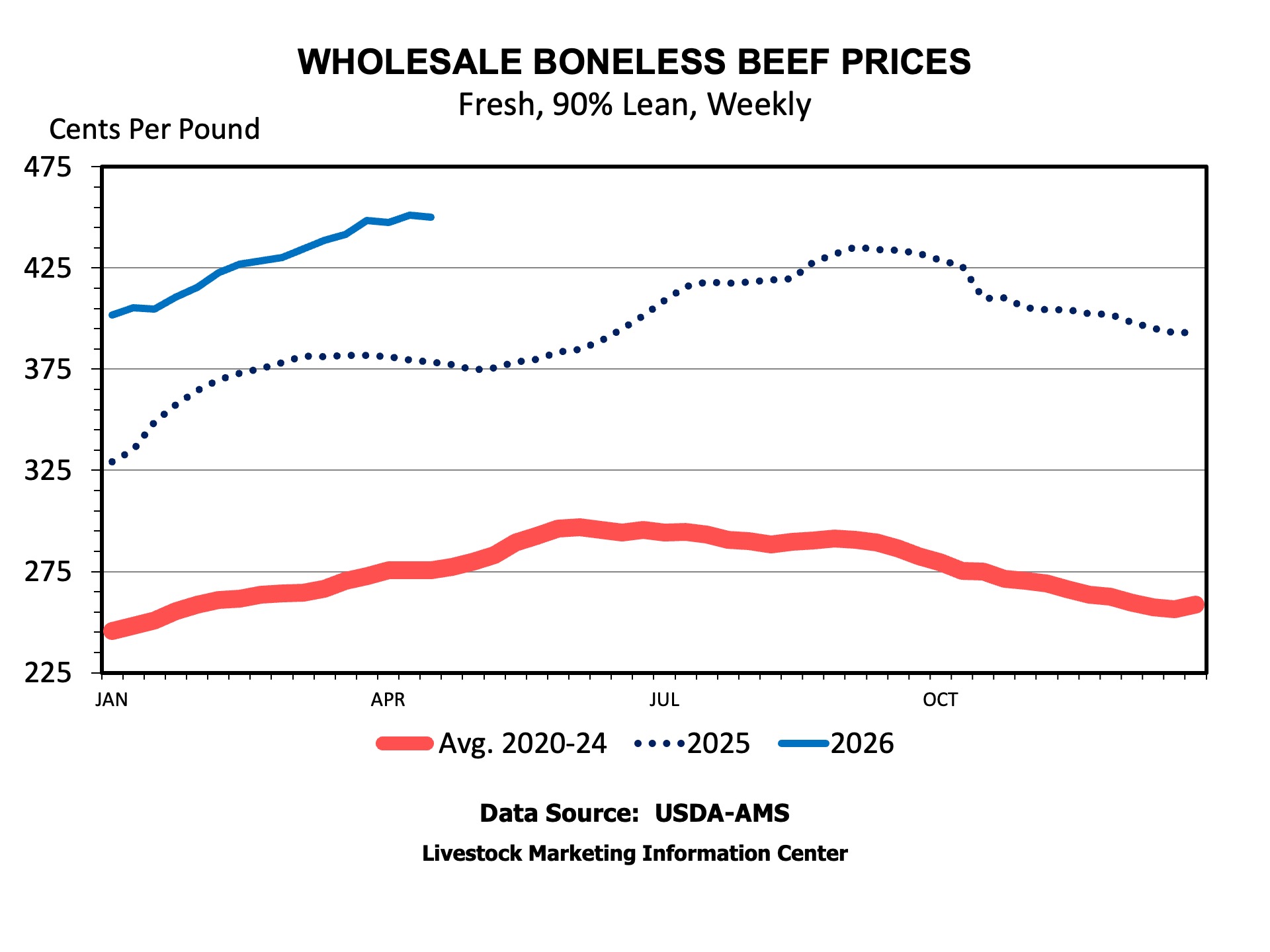
While calf and fed cattle prices have continued to set new record highs in the cash and futures market, cull cow prices have continued their slow ascent to new highs as lean beef prices keep pulling cow prices higher. Southern Plains cull cow auction prices increased to almost $180 per cwt in late April, up about $15 per cwt since January. The seasonal price increase has been smaller than normal this year. Cutter quality cows have increased about $30 per cwt, almost 25 percent, since the beginning of the year.
One overlooked boost to lean beef prices has been record large fed cattle dressed weights. Average federally inspected fed steer dressed weights have remained over 980 pounds per carcass since late 2025. Larger carcasses produce additional fat that requires more lean beef for blending to boost its value as ground beef rather than just tallow entering the fats and oils market.
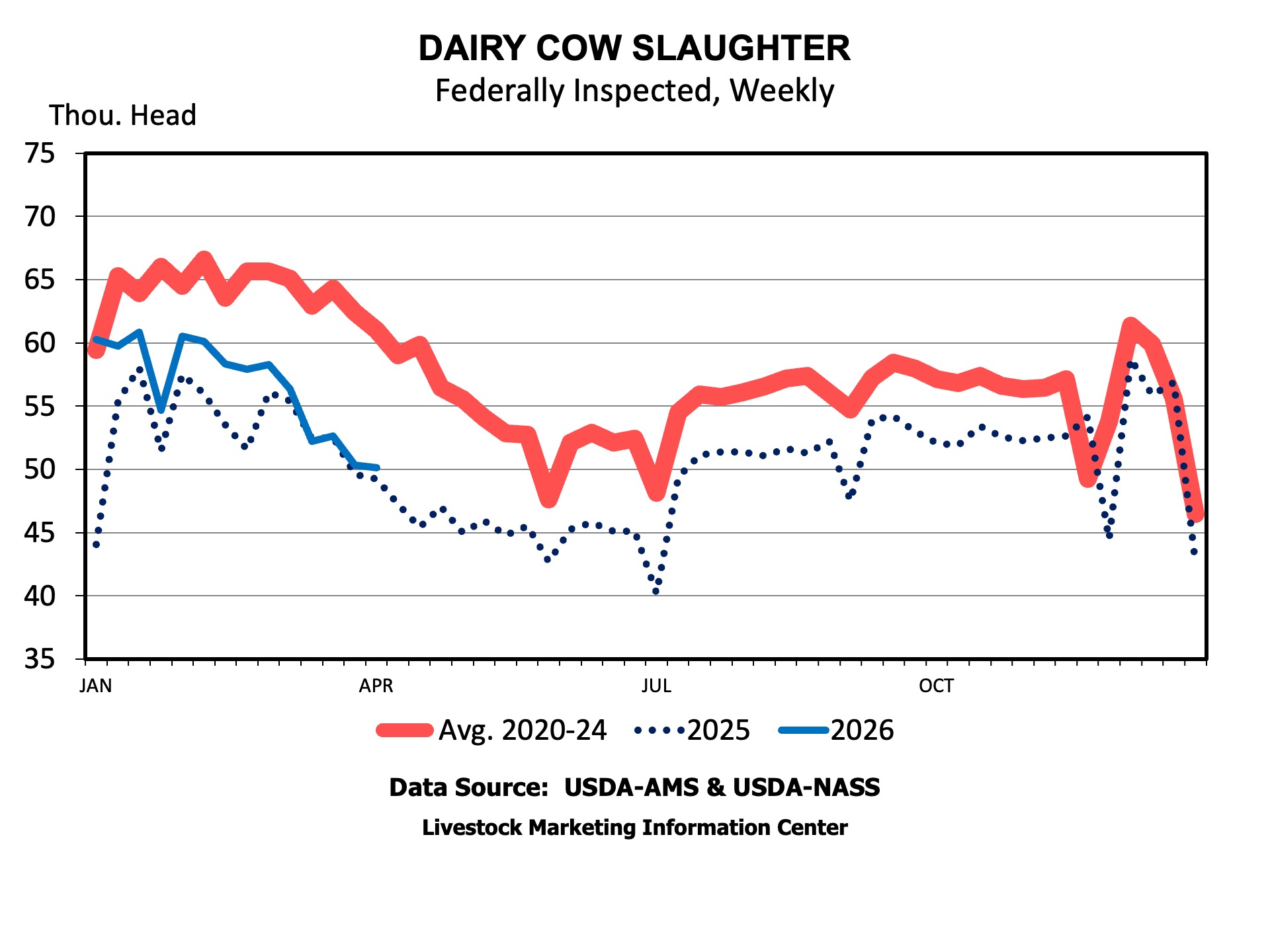
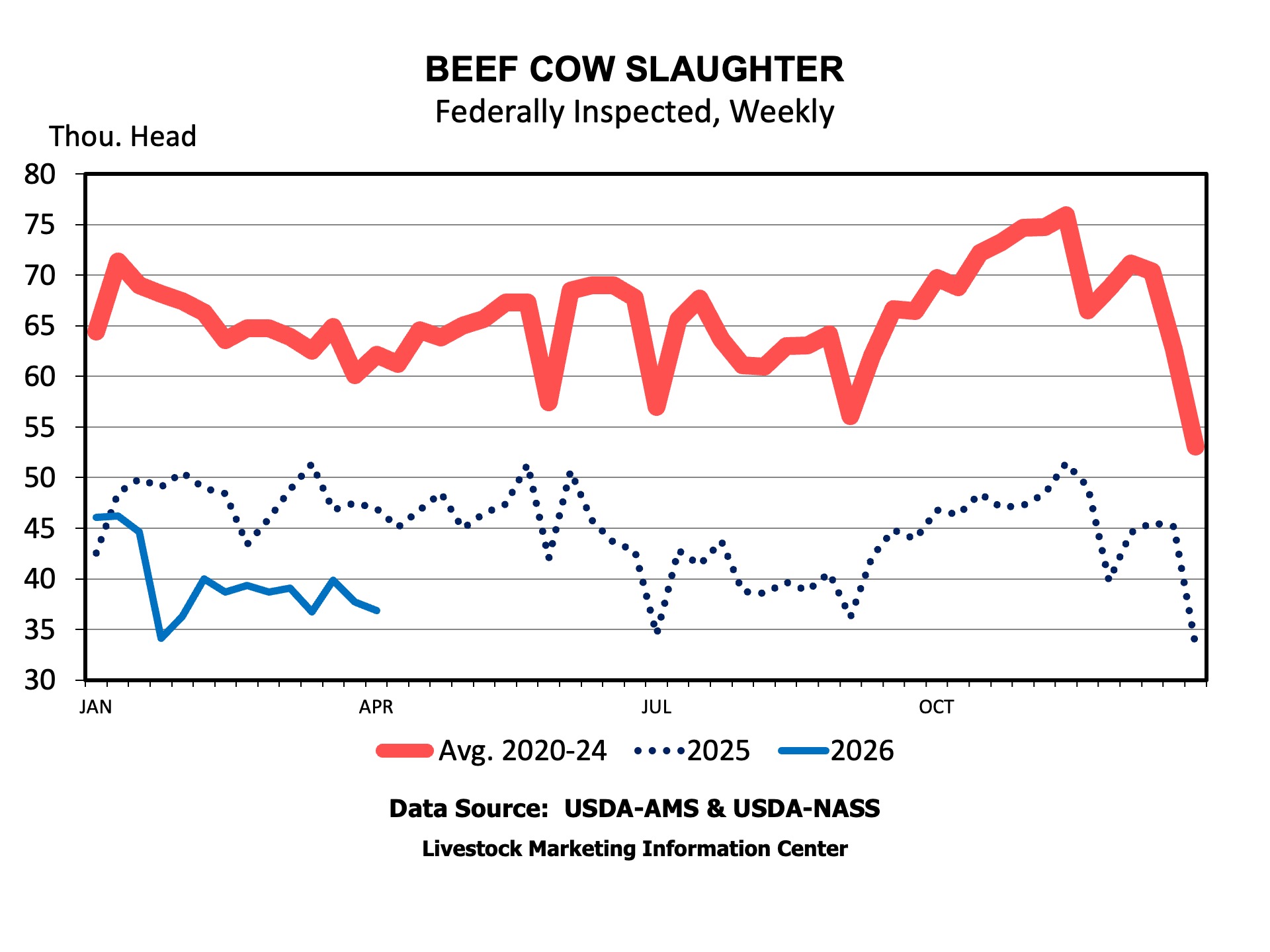
After exceeding slaughter of a year ago through the first 10 weeks of 2026, dairy cow culling pulled back to year-ago levels during April. Dairy cow culling typically peaks in January and February each year, then declines into mid-year. The decline in dairy cow slaughter has pulled down total cow culling as weekly beef cow slaughter has held at steady, but low levels. For the year, total dairy cow slaughter is reported up 6 percent compared to last year while total cow slaughter (beef and dairy) is down 5 percent. Beef and dairy cow slaughter is reported weekly by region of the U.S. In recent weeks, reported regional cow slaughter data has declined due to confidentiality rules that prevent publication if there are too few buyers to prevent revealing any one operation’s actions. The lack of reporting due to confidentiality concerns has been a problem in fed cattle reporting for many years. On the positive side, the weekly national cow slaughter data includes all of the regions, including those that could not be reported regionally.
Record high calf prices are likely keeping cows on the ranch or dairy that otherwise would have been culled to get one more calf out of them. As those calves are born and move to weaning, there may be an increase in culling as those cows come to market. Cull prices tend to peak mid-year, so there is room for cow prices to continue to increase over the next couple of months. Beyond just the seasonal pattern arguing for higher prices, cow culling should continue to be lower than last year, further supporting prices. Beef cow slaughter is expected to remain well below a year ago. Better milk prices should restrain dairy cow culling even though the herd remains large.
Anderson, David. “Cull Cow Prices Keep Climbing.” Southern Ag Today 6(19.2). May 5, 2026. Permalink