
Authors: Luis Ribera and Landyn K. Young
The U.S. is highly competitive in agricultural production and the largest agricultural exporter in the world. In 2024, these exports were estimated to total $181.3 billion. Given that the world population is expected to reach nearly 10 billion by 2050, the U.S. is well positioned to be the source of agricultural products to feed the growing population. Moreover, global GDP is expected to grow between 2 and 4 percent through 2050. This means that not only will there be more people to feed, but also those people will have more purchasing power.
Of the top eight U.S. agricultural export commodities, the U.S. ranks first in global exports of corn and pork, and second in soybeans, cotton, and poultry (Table 1). Meanwhile, Brazil, another powerhouse in agricultural production with $144.4 billion in agricultural exports in 2024, ranks first in global exports of soybeans, beef and veal, cotton and chicken, and second in corn and soybean meal. Brazil’s ability to double crop, produce two crops in the same season, and its potential to double or even triple its cropland puts it in a very advantageous position to continue to increase its global food market share. On the other hand, U.S. productivity and agricultural infrastructure, i.e., roads, rail, waterways, and ports, help in remaining competitive globally.
One area that erodes U.S. competitiveness is the increase in government regulations. To illustrate, Figure 1 shows the total number of pages published in the Code of Federal Regulations, increasing from around 15,000 in 1950 to around 190,000. If the cost of U.S. regulations were a country, it would be the fourth richest country in the world, just behind the U.S., China, and Japan. Moreover, a study by the National Association of Home Builders stated that 23.8 percent of the cost of a new single-family home, or an average of $93,870, is due to government regulations. Finally, regulatory costs, also known as societal hidden taxes, are equivalent to $14,684 or 22 percent of the 2020 annual household expense budget; more than any other expenses except housing, which is $22,624 (Figure 2).
Regulatory costs are an added source of concern to agricultural production as well. A study by Hamilton and McCullough (2025) showed that while production costs for a lettuce farmer in Salinas Valley, California, have increased significantly over the years, regulatory costs have increased exponentially from 2006 to 2024 (Table 2). In 2006, the cooperating lettuce grower reported regulatory costs totaling $109.15 per acre, increasing to $977.30 per acre in 2017, and growing to $1,600.12 per acre in 2024, which is a 63.7 percent increase from 2017 and a 1,366 percent increase since 2006. Regulatory costs comprised just 1.24 percent of production costs in 2006, then rose to 8.9 percent in 2017 and 12.6 percent of production costs in 2024. Agriculture is a hard business to be in; producers deal with constant price volatility, increasing input costs, pests, and weather, among many other challenges outside of their control. On top of that are increasing regulatory costs, which add yet another barrier to remaining competitive in the global arena with countries that do not have such a burden.
Table 1. Ranking of Agricultural Exports for Selected Commodities, 2025
| United States | Brazil | |
| Corn | 1 | 2 |
| Soybean | 2 | 1 |
| Beef-Veal | 4 | 1 |
| Pork | 1 | 3 |
| Wheat | 5 | 10 |
| Soybean Meal | 3 | 2 |
| Cotton | 2 | 1 |
| Poultry | 2 | 1 |
Figure 1. Total Pages Published in the Code of Federal Regulations, 1950-2023.
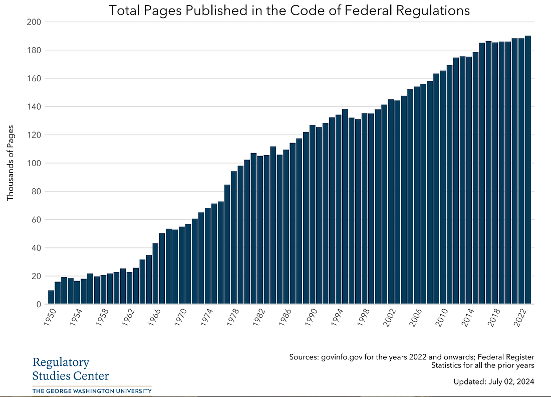
Figure 2. U.S. Household Expense Budget of $66,928 Compared to Regulatory Costs
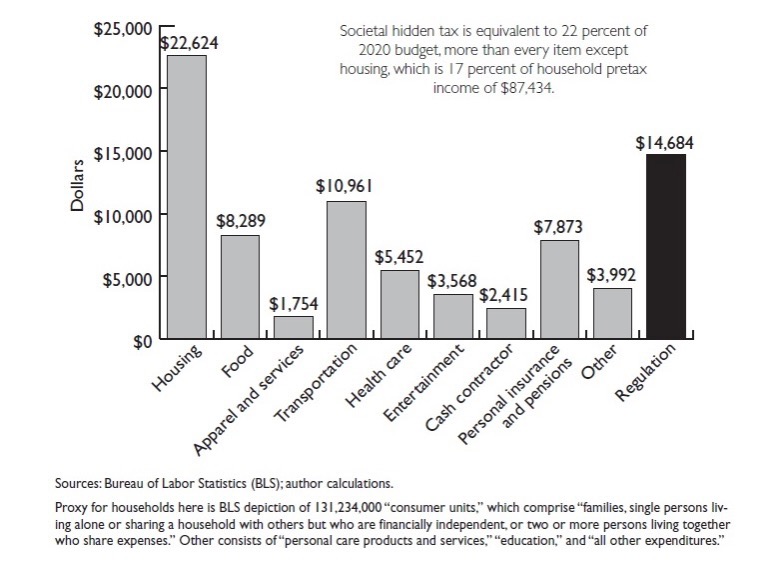
Table 2. Regulatory Costs for Salinas Valley Lettuce Grower, 2006, 2017, and 2024.
| Regulatory Category | 2006 | 2017 | 2024 |
| Cost per acre | |||
| Education/Training for Regulatory Compliance | $1.27 | $26.31 | $25.60 |
| Air Quality Requirements | $0.00 | $5.31 | $8.29 |
| Water Quality/Quality Requirements | $4.30 | $18.57 | $29.72 |
| Department of Pesticide Regulation | $22.98 | $35.55 | $47.59 |
| Food Safety – LGMA Assessments | $0.64 | $181.48 | $244.15 |
| Food Safety – PR Assessments | $19.66 | $14.88 | $13.18 |
| Labor Health & Safety Requirements | $0.00 | $28.72 | $43.71 |
| Worker’s Compensation | $58.94 | $336.23 | $428.40 |
| ACA Requirements | $0.00 | $141.19 | $334.47 |
| Labor Wage Requirements | $1.36 | $189.10 | $425.00 |
| Totals (per acre) | $109.16 | $977.34 | $1,600.12 |
References
Adcock Flynn, Luis A. Ribera, Yuri Calil, and Constanza Valdes. “Brazil at 2040: Customer and Competitor.” Center for North American Studies, Department of Agricultural Economics, Texas A&M University. CNAS Report 2018-02. October 2018.
Coffey, Bentley, Patrick A. McLaughlin, and Pietro Peretto. “The Cumulative Cost of Regulations.” April 2016
Crews Jr., Clyde Wayne. 2026. “Ten Thousand Commandments, 2026: An Annual Snapshot of the Federal Regulatory State.” 30th Anniversary Competitive Enterprise Institute Edition.
Calil, Yuri and Luis A. Ribera. 2019. “Brazil’s Agricultural Production and Its Potential as Global Food Supplier.” Choices Magazine. Quarter 3.
Hamilton, Lynn and Michael McCullough. “A Decade of Change: A Case Study of Regulatory Compliance Costs in the Produce Industry.” Cal Poly, San Luis Obispo. January 2025.
IMF World Economic Outlook (WEO). October 2015.
World Bank. “Global Economic Prospects.” January 2026.
World Trade Organization. “World Trade in Agriculture.” January 22, 2026.
Ribera, Luis, and Landyn K. Young. “U.S. Agricultural Competitiveness and Regulation Costs.” Southern Ag Today 6(19.4). May 7, 2026. Permalink