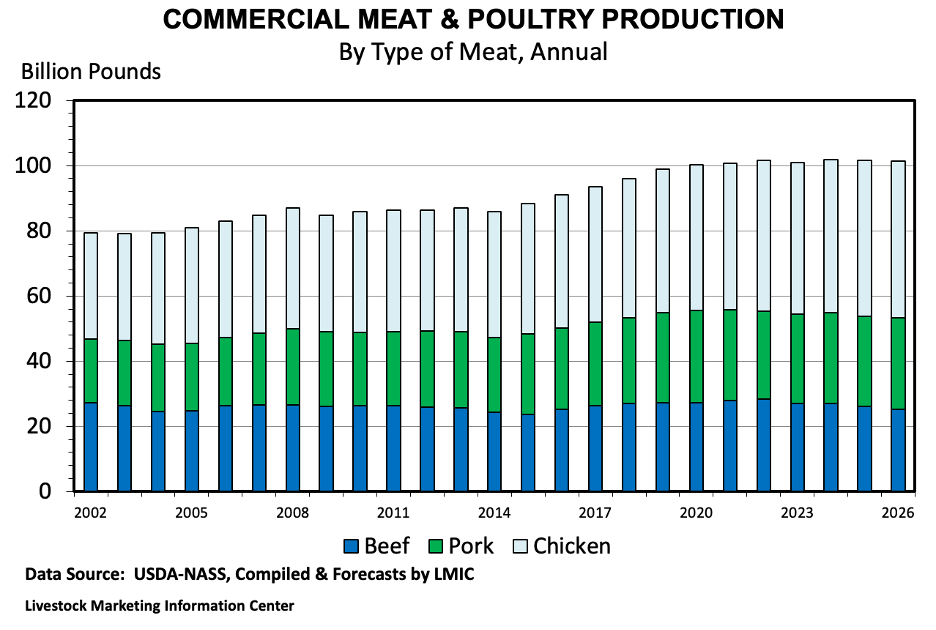
Heading into grilling season, it is interesting to look at the shares of meat production and consumption in the U.S. One fact that may surprise, the United States now produces more pork than beef, yet Americans still eat more beef per person.
The USDA ERS May 2026 Livestock, Dairy, and Poultry Outlook projects 2026 pork production near 28 billion pounds against 25.5 billion pounds of beef. The gap reflects a shrinking cattle herd while hog supplies remain ample. ERS projects the gap to widen further in 2027. Broiler chicken production is projected at 49 billion pounds.
Production is not the same as consumption. ERS projects 2026 per capita availability at 60 pounds of beef and 49.6 pounds of pork, with chicken far ahead at 105.6 pounds. Total red meat and poultry disappearance per capita is projected to top 230 pounds in 2026 which would be the highest on record.
So why does beef lead pork at the dinner table when we raise more hogs? Trade. The U.S. is expected to export roughly a quarter of its pork production but only about 9 percent of beef production. Additionally, beef imports outweigh exports and will add more beef to consumers plates.
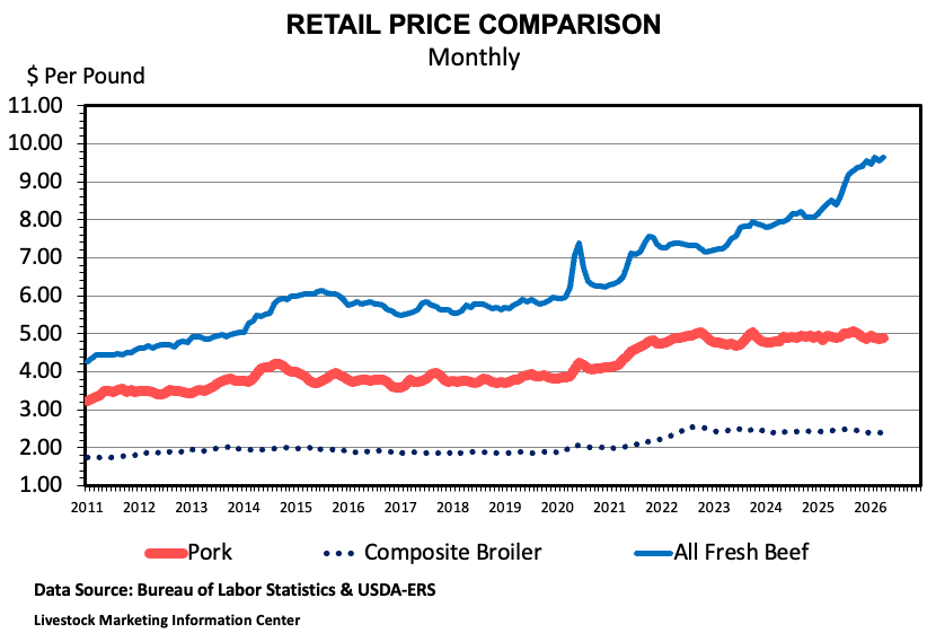
Looking at price changes adds important context. The all-fresh retail beef value hit a record high $9.64 per pound in April, up 13% from a year earlier. Retail pork prices were essentially flat at $4.89 per pound and retail broiler prices declined slightly to $2.39 per pound. Despite the highest price tag, beef demand has stayed firm as consumers are paying more and still reaching for it.
Production volume and consumer demand are different signals, and it will be important to track both over the next few years. Across proteins, it appears there will be lots of meat on grills this summer.
Maples, Josh. U.S. Meat Production and Consumption Patterns. Southern Ag Today 6(24.2). June 9, 2026. Permalink
