The latest USDA Cattle on Feed report was released on Thursday, June 18th. While there weren’t any big surprises in the report, it highlighted several interesting trends that will be worth watching over the next few months.
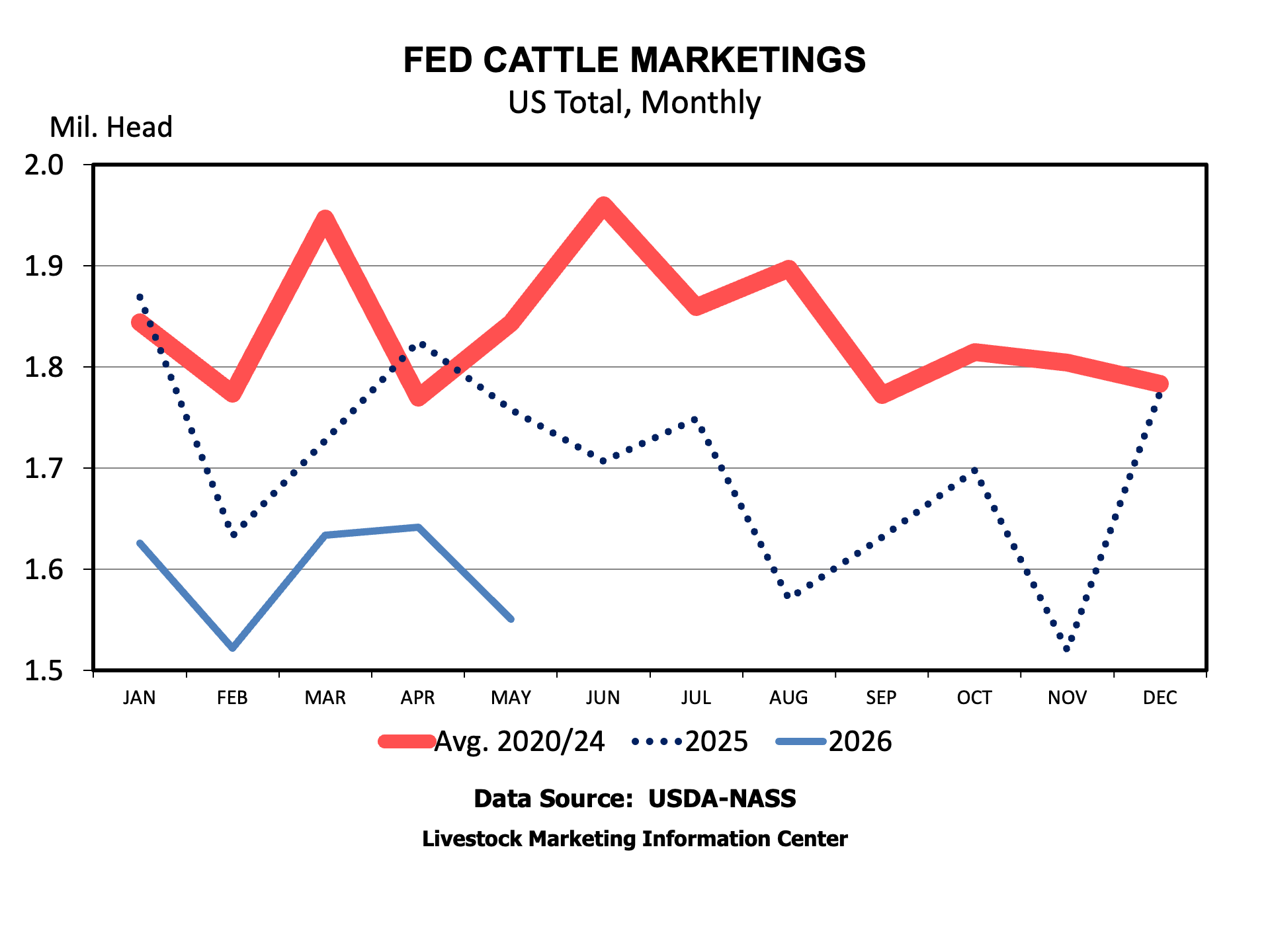
May feedlot marketings, those cattle sold by feedlots to packers, were down 11.8 percent compared to last May. Part of that decline was due to one less operating day in May 2026 compared to May 2025, which cut about 5 percentage points off marketings. But, marketings remained low regardless of the number of days. More days on feed, reduced packing plant schedules, and fewer cattle have slowed marketings.
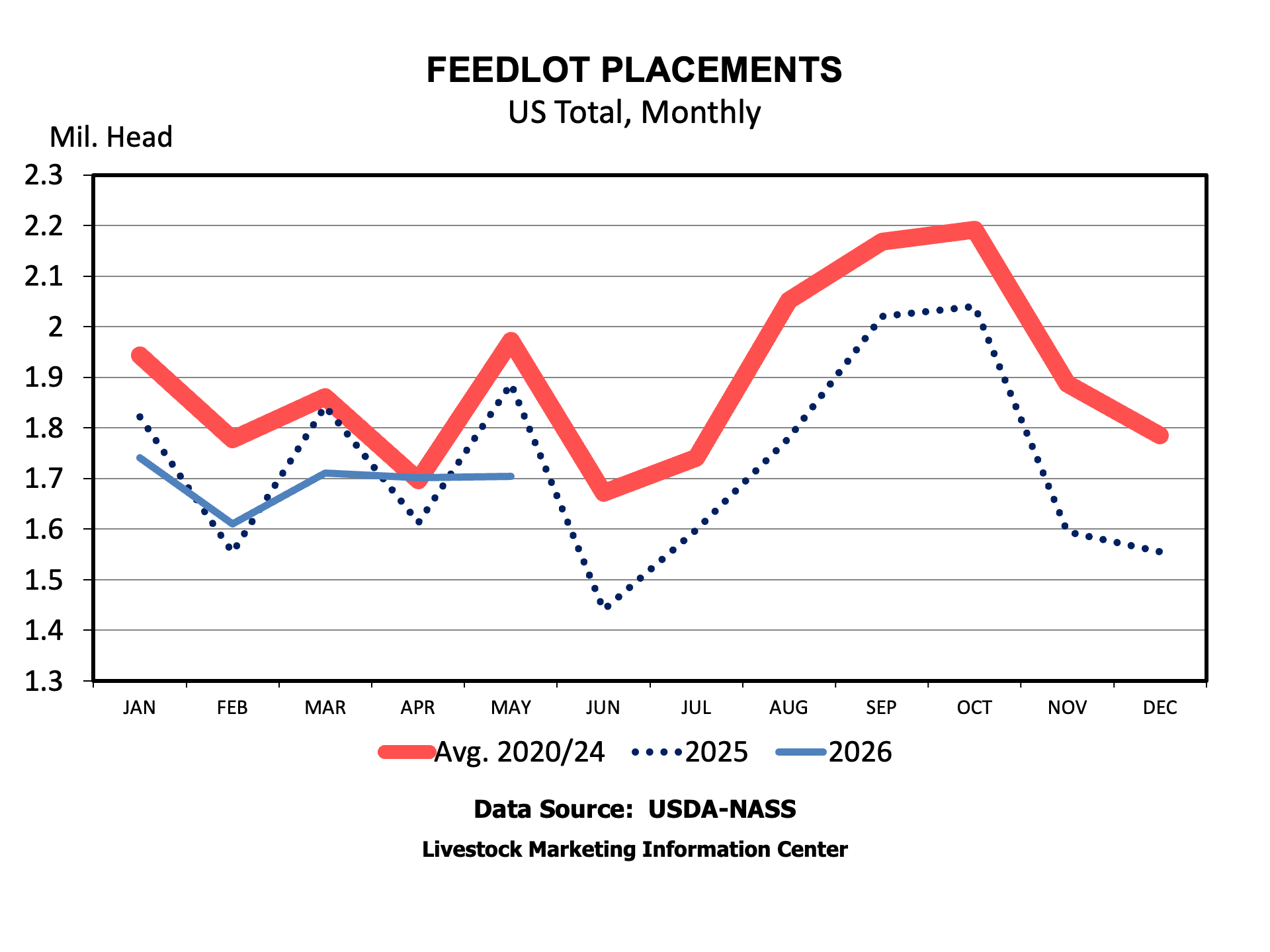
Placements of cattle into feedyards were down 9.7 percent compared to last May. Normally, close to 200,000 more feeders are placed in May than in April each year. The larger May placements are often driven by cattle coming off wheat pasture that has been grazed out or other winter grazing programs reaching the end of cool season grass pastures. This year, May placements were only 2,000 head more than April. May placements were almost smaller than April for the first time. It’s likely that some cattle that would have been placed in May were pulled forward into April given the drought status of many areas. One of the other interesting trends in placements this year is the small month to month differences. Monthly placements in 2026 have ranged from a low of 1.611 million head in February to a high of 1.741 million head in January. Normally, there is a range of about 300,000 head. This dampening of seasonal placements may have some interesting effects on marketings and beef supplies late in the year.
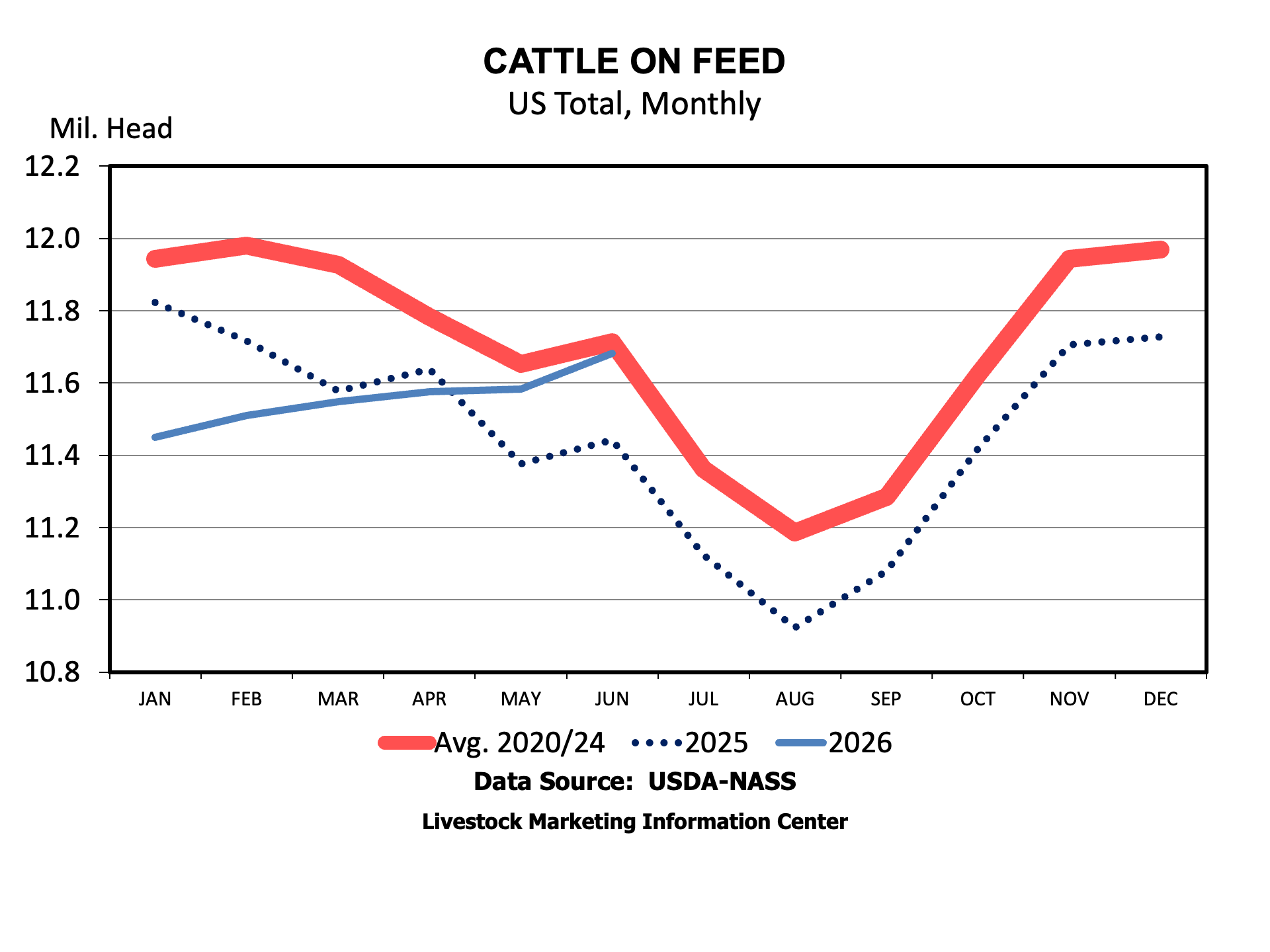
The combination of 1.551 million head marketed and 1.704 million head placed left the total number of cattle on feed larger than last year by 2.1 percent on June 1. That is the second consecutive month with more cattle on feed than the prior year and it continued the unusual trend of growing numbers on feed in the first half of the year. What does this mean for the rest of the year? More cattle on feed may mean more cattle ready for slaughter late in the year compared to last year. That should pressure prices later in 2026. The reduced placements might suggest fewer heifers being sent to feedlots but there is little evidence to support that idea. The July cattle on feed report will include the quarterly estimate of the number of heifers on feed and that will shed some light on heifer retention.
Recommended citation format: Anderson, David. “Feedlot Placements and Marketings Drop Sharply.” Southern Ag Today 6(26.2). June 23, 2026. Permalink