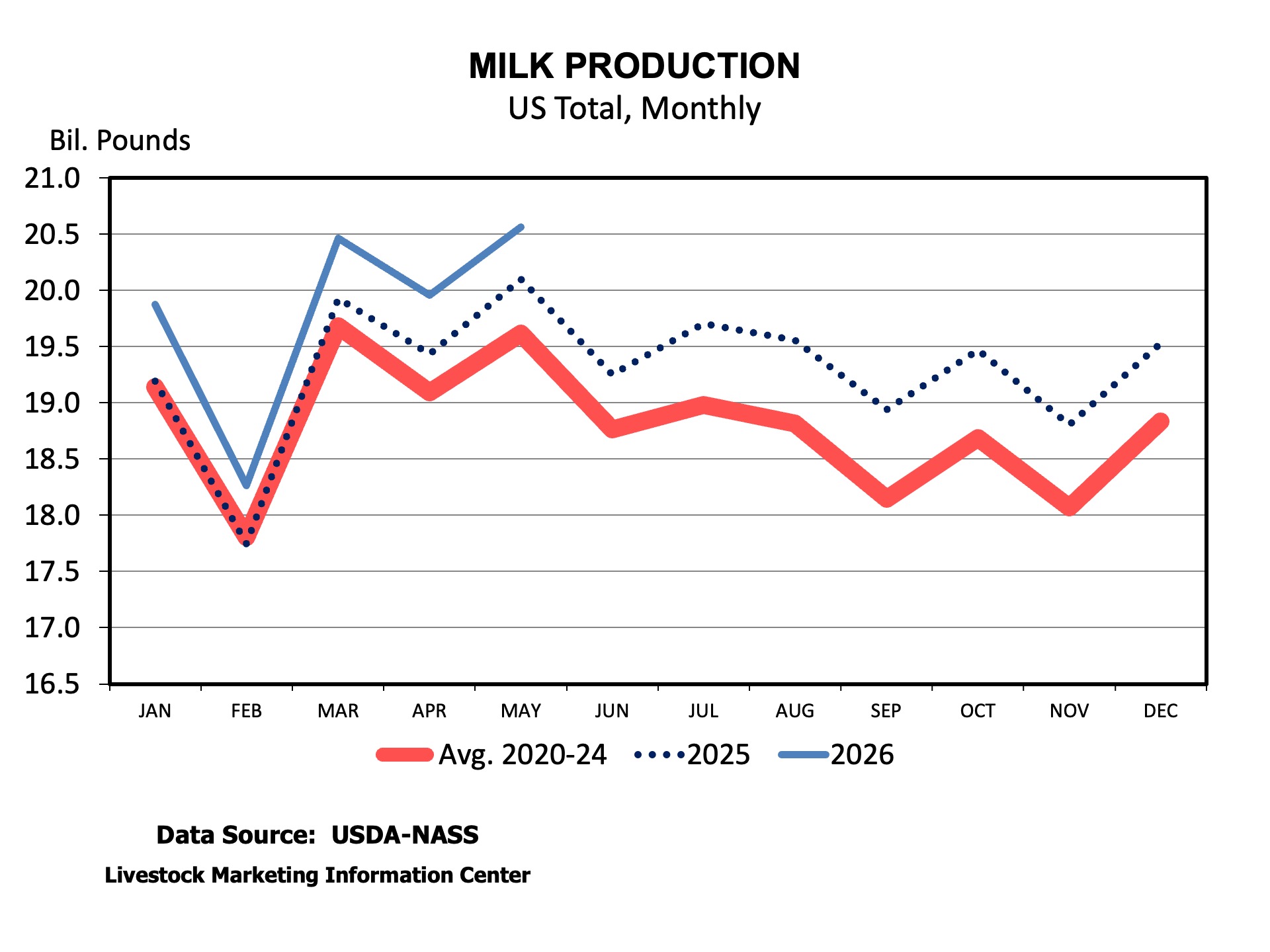
Milk production has been booming, with May marking the 15th consecutive month with year-over-year increases in production. February 2025 was the last month with a decline in milk production compared to the same month in the prior year. Milk production totaled 20.565 billion pounds in May, up 2.3 percent compared to last May. That was the largest monthly milk production on record. Production per cow of 2,128 pounds was a new record high.
In the South, USDA reports cow numbers and milk production for Georgia, Florida, Virginia, and Texas. Compared to last year, milk cow numbers were up 5,000 head in Florida, up 1,000 head in Georgia, and down 1,000 head in Virginia. Texas grew by 28,000 head in May, continuing the rapid growth in the Texas Panhandle. Growth in milk production in the other parts of the country means that milk production in the South continues to make up a shrinking share of U.S. milk production.
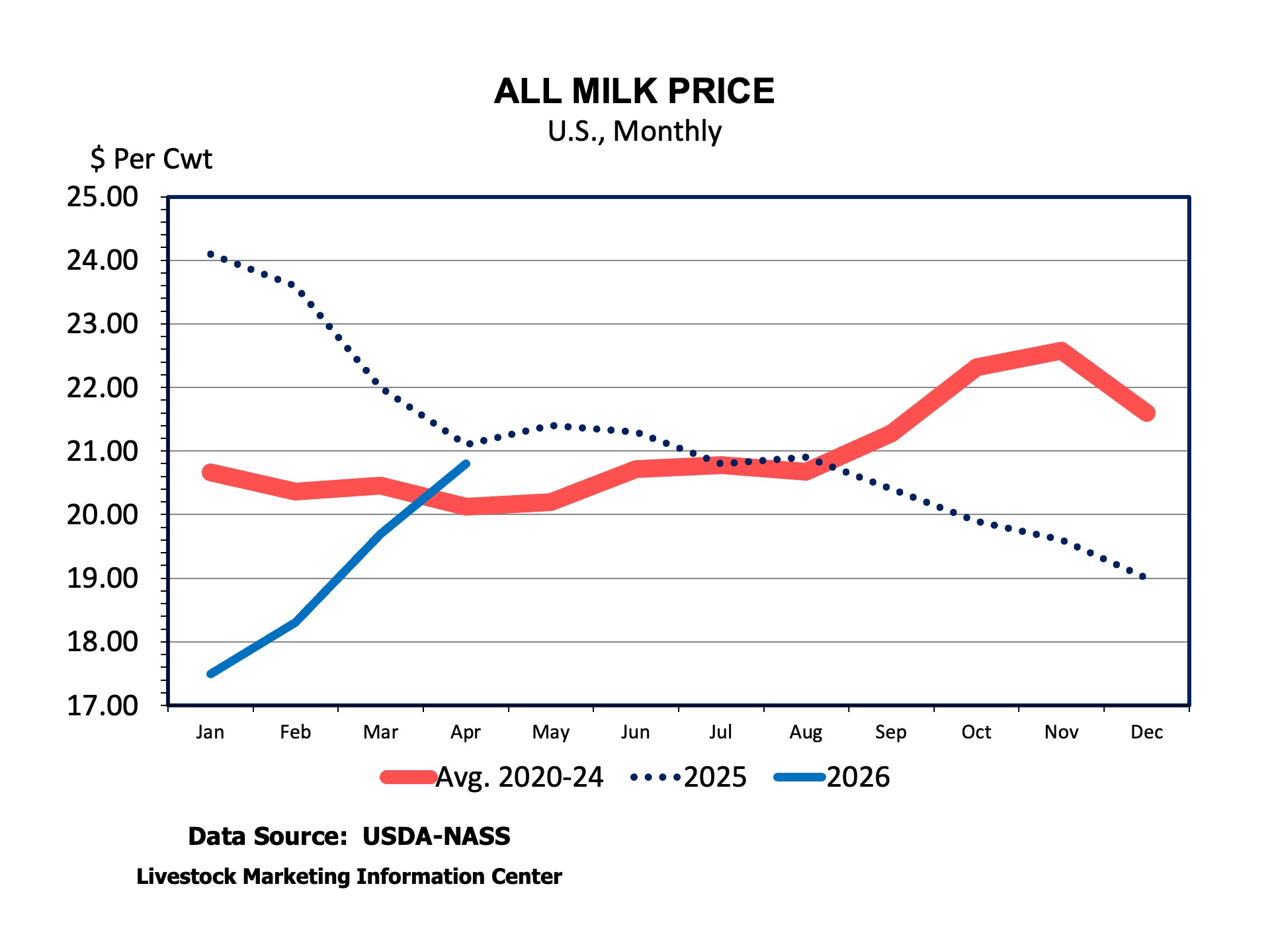
Production has been driven by profitable milk prices, growing milk processing capacity, record high calf and cull cow prices, and falling feed costs. The U.S. all-milk price (a weighted average price received by dairy farmers across all uses) began 2025 at $24.10 per cwt but fell to $17.50 by January 2026 as milk production expanded. In the face of rising milk production, milk price rebounded to almost $21 per cwt by April 2026.
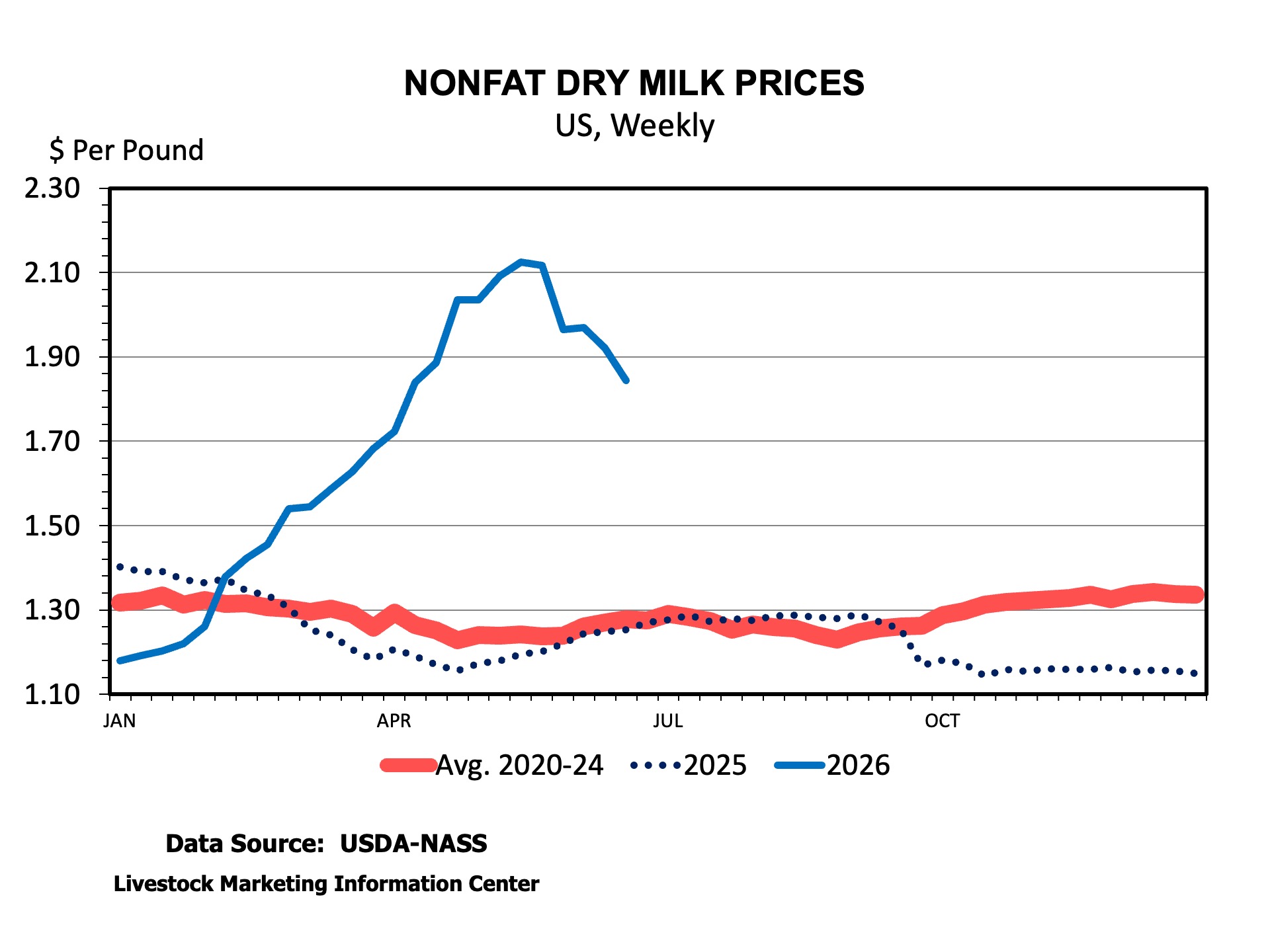
Milk prices were driven higher by a tremendous increase in nonfat dry milk powder that increased from $1.18 per pound in January to $2.13 by June. But, it appears that production growth has begun to weigh on prices. Nonfat dry milk price has declined to $1.84 per pound at the end of June. Cheese, butter, and whey prices, the other major products used to calculate federal milk marketing order milk prices, are also declining. Lower dairy product prices will start to show up in dairy producer’s milk checks in coming weeks and months. Falling milk prices are not the only problem. Dairy producers face the same rising fertilizer and fuel prices as the rest of agriculture. Replacement heifer prices have hit record highs as supplies have tightened due to producing more crossbred dairy-beef calves rather than replacement heifers for sale. Milk production should decline seasonally during the coming months, but it will remain ahead of last year.
Recommended citation format: Anderson, David. “Dairy Prices Slumping Amid Record Production.” Southern Ag Today 6(28.2). July 7, 2026. Permalink