Authors: Kevin Burkett and Brett Wolff
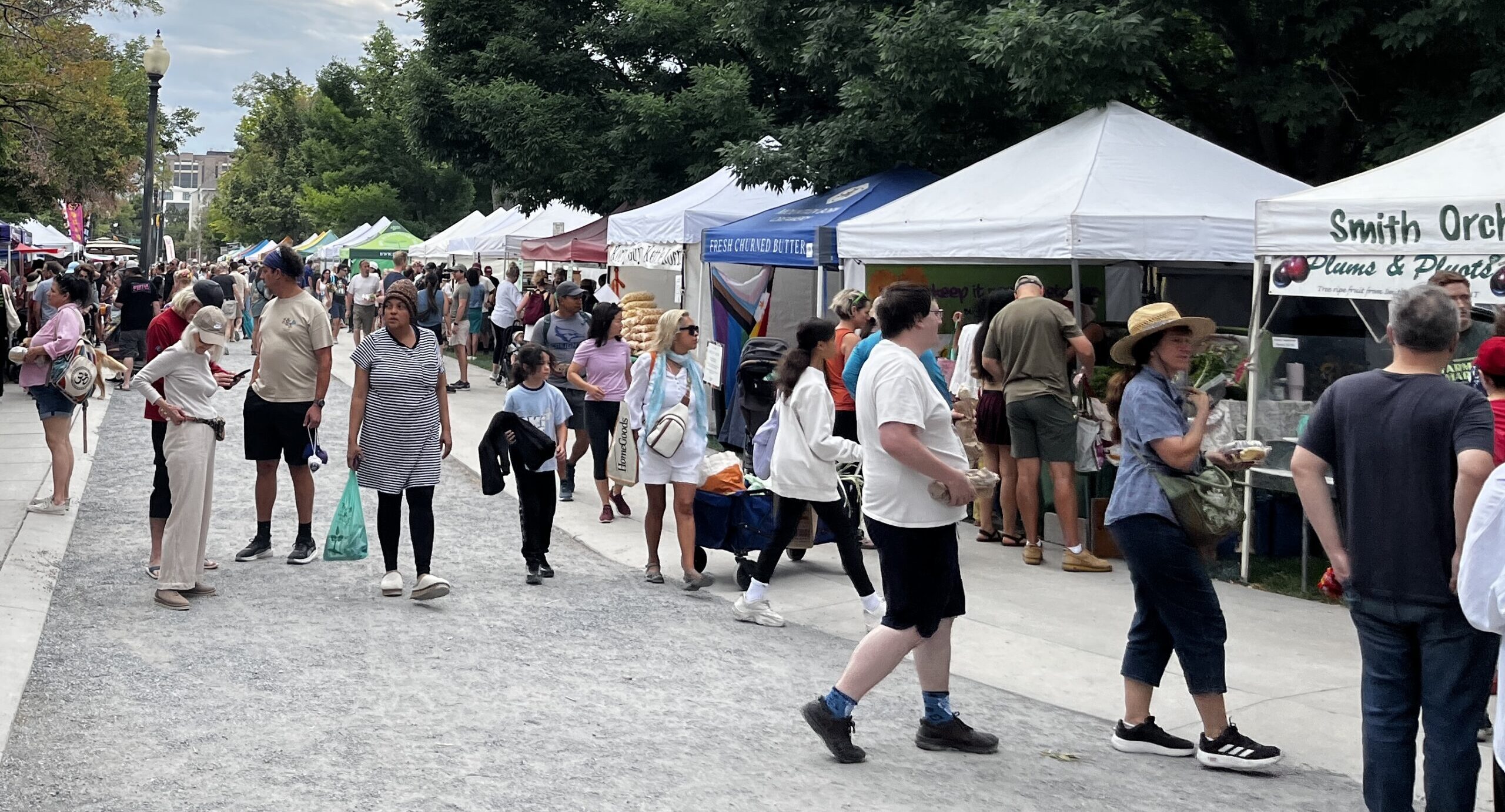
Farmers markets across the country are in full swing this time of year. Farmers markets play a critical role in local agriculture. It is a place where buyers and growers gather, a place that creates community, where people can enjoy a leisurely stroll, and where many product samples (and even a bit of town gossip) get shared. Many markets share similar features, and yet each one is a bit different as to customer segments, market structure, products being sold, and the economics behind them. This is true of markets within a state or region, and even more broadly of markets across the U.S. Just like product offerings and prices vary at grocery stores, the same is true of farmers markets. Often, product availability is based on regional tastes, seasonality, profitability, and inputs or growing conditions needed to produce the items.
Recently, a group of land-grant institutions and state programs have been meeting on a regular basis to discuss formal reporting at farmers markets. There are a small number of states that are independently coordinating reporting projects across their areas. Some states have had longer-term projects, and others are more recent. The methods and details may differ, but the goal of the programs is the same: documenting which items are being sold, when, and at what price. While the United States Department of Agriculture (USDA) has collected market data via its Market News segment for a long time, the local farmers market reports focus on direct-to-customer sales (compared to wholesale) and aims to include staple items, (sometimes) previously undocumented crops, and multiple regions of a state or area (compared to one urban center). The data collected seeks to represent numerous markets within a state to help producers, consumers, and agriculture professionals understand more about local foods.
These reports can help farmers, customers, researchers, and the public. The University of Kentucky found that farmers use local price reports to set prices, choose crops, budget, write business plans, determine markets, conduct feasibility studies, and pursue grants and loans. Technical assistance providers also use reports to support clients in navigating these decisions (Wolff and Woods). For customers, it can provide information on what’s available, when, and the cost. This can be especially informative for value-added processors, restaurants, and other food businesses that might put an emphasis on using local products. For research, data can show the effects of the overall economy, support programs, natural disasters, black swan events, or political impacts. For a general audience, price reports can enhance our understanding of local agriculture production and food systems. Annual reports provide data to analyze trends, developments, and economic impacts over time. For these reasons, the states and project coordinators continue to push local reporting.
Currently, the authors are aware of price reporting projects in Alabama, Kentucky, Missouri, New York, Pennsylvania, South Carolina, Tennessee, Virginia, Vermont, and West Virginia.
For more information about the reporting projects or to get involved, please contact the article authors.
Reference:
Wolff, B. and T. Woods (2026) Local Price Reporting as Food System Infrastructure: Evidence from Kentucky Farmers Markets and Produce Auctions. Forthcoming.
Recommended citation format: Burkett, Kevin, and Brett Wolff. “How Much Are You Selling Those Tomatoes For? A Regional Collaboration.” Southern Ag Today 6(29.1). July 13, 2026. Permalink