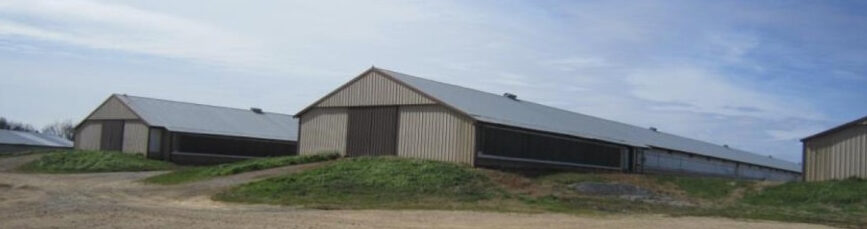
Of all the factors that might influence the cost of producing poultry for U.S. contract growers, data centers likely would not come to mind. Yet their impact may be broader than expected, bringing both benefits and challenges.
First, we might consider what a data center does. They are physical buildings that house large numbers of computer servers. These computers provide 3 basic roles: data storage, computer processing, and sending out digital information. Artificial intelligence (AI) systems use these massive computer systems to perform the calculations, searches, and generate answers. Because a data center is a massive number of computer networks linked together, they require a massive amount of electricity and water to keep them running and cool.
On the positive side, modern poultry farms are increasingly connected through internet-based, integrated control systems. AI based decision systems hold the potential to further transform management decision making leading to economic gains. Internet based control systems allow growers to monitor and adjust housing conditions around the clock from virtually anywhere using smart devices. The continued expansion of data networks enhances the speed, reliability, and responsiveness of these systems. This benefits growers by helping them better maintain bird welfare and respond quickly to changing conditions, while integrators gain from improved efficiency and lower grow-out costs.
However, the downside is more complex. Data centers are massive consumers of electricity. Estimates suggest their power demand could rise significantly by the end of the decade, potentially accounting for a sizable share of total U.S. electricity use. Increased demand from data centers is widely expected to contribute to higher electricity costs. This matters greatly for poultry operations, which already rely heavily on electricity for ventilation, cooling, and environmental control. A typical broiler farm in the Southeast may use around 1.65 kWh per square foot annually, totaling roughly 132 megawatt-hours for a standard four-house operation.
Water use presents another important area of overlap. Both poultry farms and data centers require substantial amounts of water to manage heat. A large data center may consume over a million gallons of water per day, many times what an entire broiler farm uses in a full year. Although the scale and timing differ, both experience peak demand during hot weather. Additionally, both are often located in rural areas where supply systems may be less robust and water resources more limited. Increased competition for water can strain local utilities, drive up water costs, and potentially deplete aquifers that supply farm wells. This is particularly concerning in regions already facing tight water supplies.
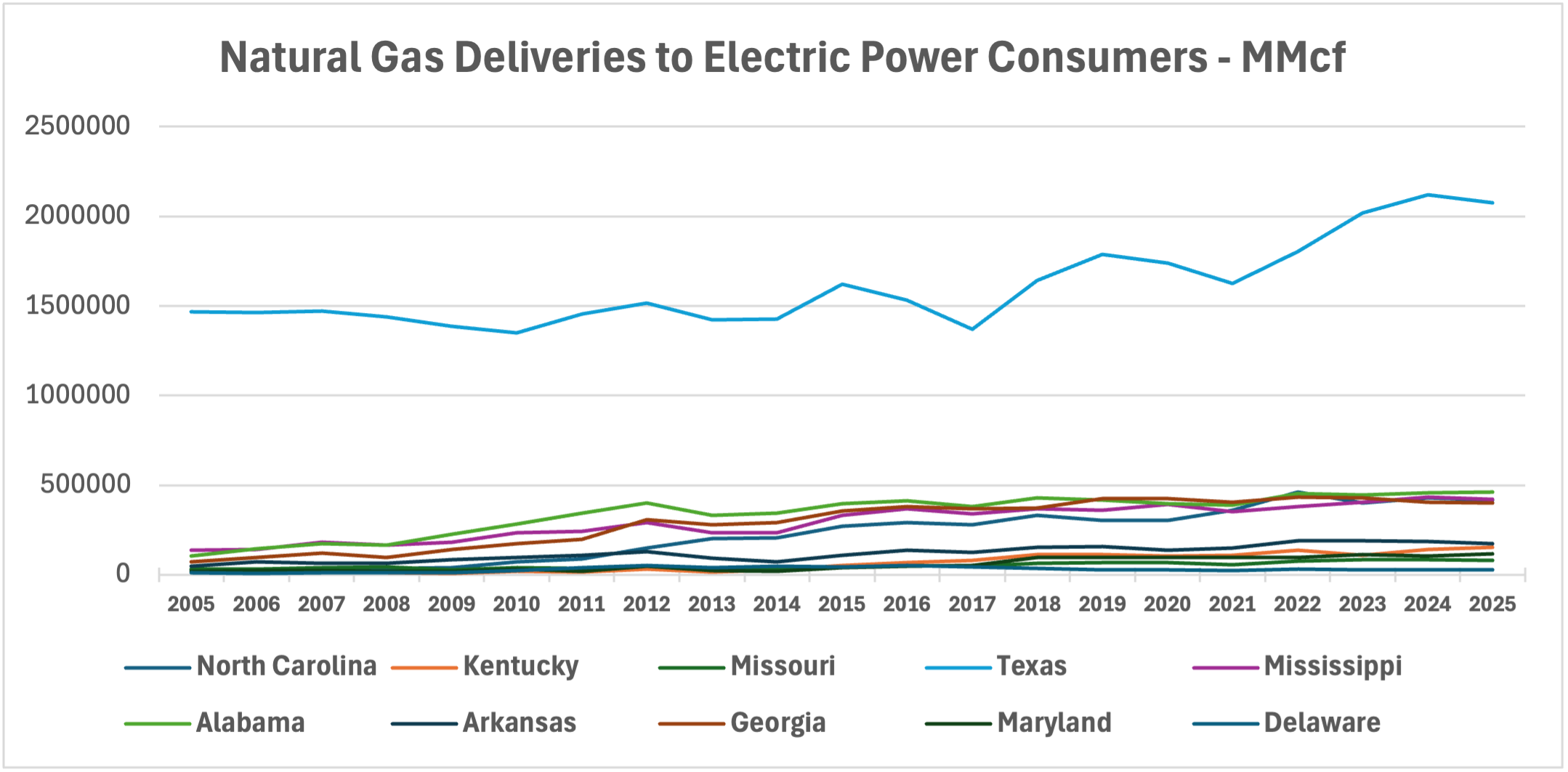
The effects may extend even further into heating costs. To meet growing electricity demand, much of it driven by data centers, utility companies are investing in new natural gas-fired power plants as a relatively fast way to expand generation capacity. In parts of the Southeast, planned additions of natural gas capacity are substantial (Figure 1). Some data center operators are even considering on-site natural gas generation to power their facilities independently.
For poultry growers, this increased demand for natural gas could lead to higher fuel prices if supply does not expand sufficiently. Since heating is a major cost, especially in broiler production, this could significantly affect profitability. The situation is further complicated by the link between natural gas and propane (LP), as a large share of U.S. propane is derived from natural gas production. Increased natural gas output could potentially boost propane supply and moderate LP prices, meaning growers using propane might see different cost impacts than those relying on natural gas.
In short, while data centers provide the internet infrastructure to improve efficiency for modern poultry production, they also intensify competition for electricity, water, and fuel. This creates a mixed and evolving cost landscape for growers.
Figure 1: Looking at the top 10 broiler producing states, increased natural gas usage by power plants is seen across the board. However, the broiler heavy states of Texas, Alabama, Mississippi, Georgia, and North Carolina are leading the way in increased NG usage for electricity production (U.S. Energy Information Administration, 2026)
References:
- “Welcome to Gas Land – how natural gas is powering the AI boom.” www.datacenterdynamics.com, May 01, 2025
- “Propane Supply News and Market Update.”, www.propaneresources.com, June 30, 2026
Recommended citation format: Brothers, Dennis. “Data Centers and Poultry Growers.” Southern Ag Today 6(29.2). July 14, 2026. Permalink