Authors:Kodjo Barnor, Doctoral Student, Texas A&M University & Chrystol Thomas, Assistant Professor & Extension Specialist, Texas A&M AgriLife Extension
Data centers are moving into rural areas across the United States, hence competing with farmers and communities for land, water, and energy. Understanding what these facilities require and what they don’t offer in return is essential for rural communities. The key question is whether data centers complement or compete with agricultural operations. The answer depends largely on where they are located and how they use electricity, water, and land resources.
These facilities underpin artificial intelligence, cloud computing, and online services. Development is expanding rapidly across the United States, with Virginia and Texas becoming the most attractive locations due to their competitive electricity markets, abundant land, and growing renewable energy capacity (Figure 1). Texas has roughly 4 gigawatts (GW) of capacity, with almost 8 GW under construction, and could surpass Virginia as the largest global data center market by 2030 [1].
Figure 1. 2025 year-end leased data center and hyper-owned capacity (GW).

What Kind of Facilities Are We Talking About?
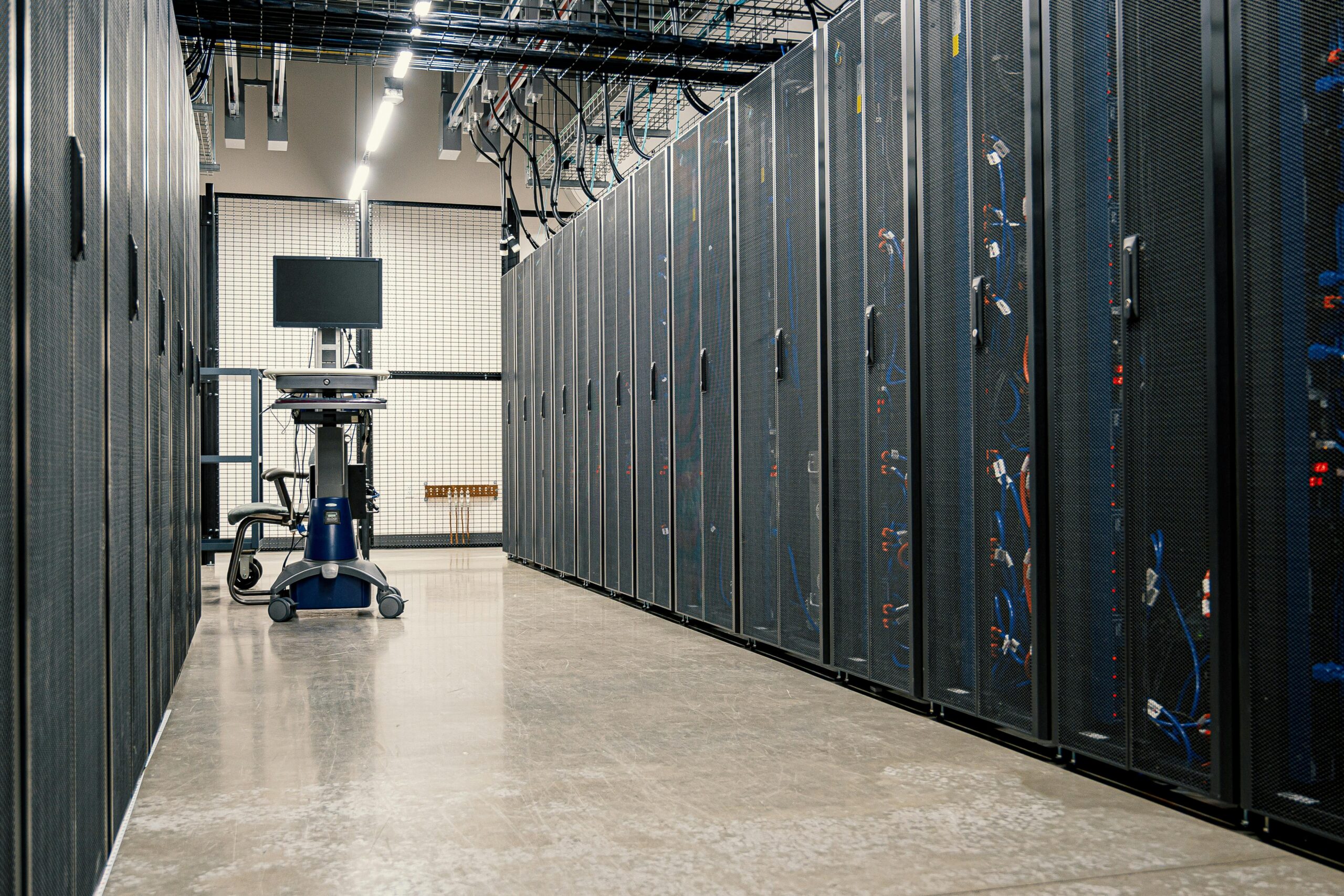
Data centers vary widely in size. Small edge facilities serve local networks, while hyperscale facilities built by companies such as Amazon, Google, and Microsoft can span hundreds of acres and consume as much electricity as a small city (Table 1). These large facilities are increasingly locating in rural areas where land is available, and energy infrastructure can be expanded.
Table 1: Major Data Center Types and Typical Characteristics
| Type | Typical Size | Power Demand | Land | Water Use |
| Hyperscale | 100,000+ sq ft | 100+ MW | 100–1,000+ acres | Up to several million gal/day |
| Cloud | 50,000–200,000 sq ft | 10–99 MW | 10–40+ acres | Moderate to high |
| Enterprise | 10,000–50,000 sq ft | 1–10 MW | 5–15 acres | Thousands gal/day |
| Edge/Micro | <10,000 sq ft | <1 MW | <1 acre | Minimal |
Energy Use
Unlike agricultural electricity use, which is seasonal, data centers operate continuously. A 100 MW facility running around the clock consumes roughly 2,400 megawatt-hours of electricity per day which is comparable to the daily electricity use of tens of thousands of households. In Texas, ERCOT forecasts that peak electricity demand could reach 218 gigawatts by 2031, compared with a record peak of 87 gigawatts in 2025 [3]. Data centers are expected to contribute significantly to this growth.
For irrigators and other large electricity users, rising demand could mean higher electricity rates and greater grid stress during summer months when agricultural demand peaks. Large industrial loads may also require transmission upgrades, and rural electric cooperatives could face infrastructure costs that ultimately affect rates for agricultural customers.
Water Use
Many data centers rely on evaporative or hybrid cooling systems requiring significant water withdrawals. A facility using one million gallons per day consumes more than 1,100 acre-feet annually; a hyperscale campus can require several times that amount. In regions overlying the Ogallala Aquifer, the Trinity, the Carrizo-Wilcox, or other stressed groundwater systems, this additional demand is not trivial.
Texas groundwater law follows the rule of capture, meaning landowners generally have the right to pump groundwater beneath their property unless regulated by local groundwater conservation districts. A data center developer purchasing land in your area has the legal right to withdraw substantial groundwater without compensating neighboring agricultural operations, unless local limits are in place. Producers should engage their local groundwater conservation district early in any proposed development process to understand what protections exist.
Land Use
Data centers compete with agricultural land uses on a long-term basis. Once developed, these sites rarely return to agricultural production. This is a tradeoff that deserves careful evaluation in communities where farmland values underpin local economies. While projects can generate property tax revenue and construction employment, they typically employ relatively few workers once operational. A large facility may require only a few dozen full-time employees. Also, some developers are pairing data centers with nearby solar or wind generation to meet sustainability targets and stabilize energy costs. These projects may create opportunities for landowners.
Conclusion
Data centers are becoming an increasingly visible feature of rural America. While they can generate local revenue, they also place continuous demands on electricity and groundwater resources used by agriculture. Communities considering these developments should evaluate key issues in advance: which aquifer will supply water and at what volumes, whether transmission upgrades are required and who will bear the costs, the long-term employment footprint, and whether the overall economic benefits outweigh potential pressures on local infrastructure and resources. Careful evaluation of these factors will help communities better manage the expansion of data infrastructure across rural areas.
References
[1] Batson, A. 2026. North America data center report: Year-end 2025. Jones Lang LaSalle (JLL). https://www.jll.com/en-us/insights/market-dynamics/north-america-data-centers.
[2] Northeast Regional Center for Rural Development (NERCRD). 2026. Data Centers: Assisting Communities in Understanding the Challenges and Opportunities. Webinar presentation slides, February 24. Pennsylvania State University.
[3] ERCOT. 2025. Long-Term Load Forecast Report. Electric Reliability Council of Texas.
[4] Houston Advanced Research Center (HARC). 2026. Thirsty Data: Water Use and the Projected Data Center Boom in Texas.
Barnor, Kodjo, and Chrystol Thomas. “Data Centers and Their Implications for Rural Communities.” Southern Ag Today 6(14.5). April 3, 2026. Permalink
