
Last year was an interesting year for the cattle industry, which came with its own set of rewards and challenges for cattle producers. The first quarter of 2026 has not fallen short of keeping things interesting, for lack of a better term. Continued drought conditions, rising input costs due to the Iran war, and uncertainty as to how long high market prices will last are all contributing to the slow movement towards rebuilding the cow herd.
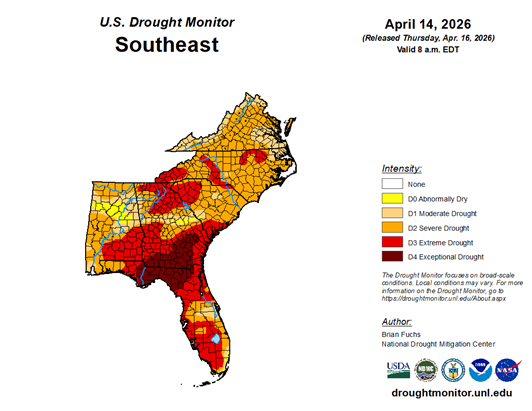
As of April 14, 2026, the U.S. Drought Monitor indicated that 100% of the Southeast is experiencing some level of drought, with 75% of the region experiencing severe or extreme drought. Areas of exceptional drought are occurring in the Florida Panhandle and in South Georgia. Prolonged drought conditions combined with the unusual freezing temperatures at the beginning of the year have resulted in stressed forages and weed emergence. Compensating for limited forages makes it challenging to maintain an existing herd’s nutritional requirements, further hindering the decision to increase herd numbers. We have officially transitioned from La Nina into an ENSO-neutral pattern that is expected to quickly move into El Niño this summer, hopefully bringing some much-needed rain soon.
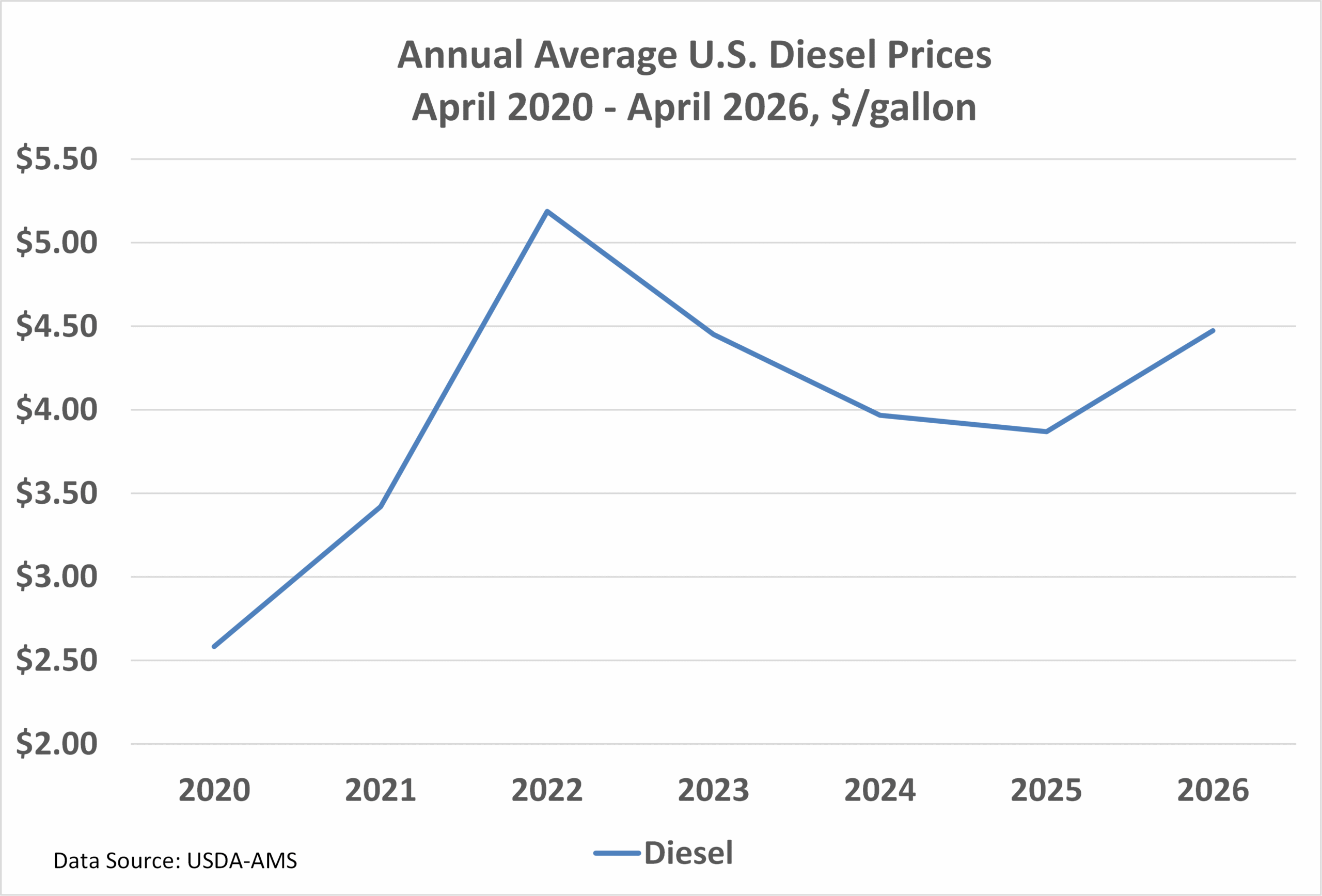
In addition to drought conditions, fertilizer and fuel costs have risen well above year ago levels due to the Iran war. Average diesel fuel prices in April are 55% higher than in April 2025, with prices reaching over $6.00/gallon in some areas. March prices in the Southeast for potash, UAN, and urea, were 5%, 52%, and 50% higher year over year, respectively. Increases in fertilizer costs will influence decisions on how much fertilizer to purchase this year, potentially resulting in reductions in forage quality and yield. Without adequate forage and with increases in input costs, the thought of increasing herd numbers moves to the back of the line.
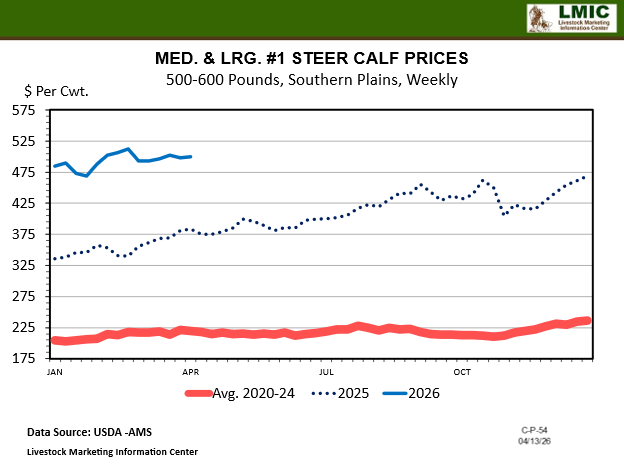
Cattle prices, with the exception of a few corrections at the start of the year, are continuing to hold strong. Prices the week of April 13th for 500–600-pound steer calves in the Southern Plains were 31% higher than April 2025 and 128% higher than the 5-year average. Strong consumer demand and tightening supplies are supporting high prices and will eventually encourage retention and expansion. Decisions have already been made to stabilize by holding more heifers back this year as we saw in the USDA Cattle Inventory report. But rising costs and forage availability could prolong the shift from stabilizing to rebuilding if the resources are not there to support the growth. Nonetheless, another year of profitable returns to cow-calf producers is expected amidst another “interesting” year in the cattle industry.
U.S. Department of Agriculture. (2026). Fertilizer prices by region. https://agtransport.usda.gov/Fertilizer/Fertilizer-Prices-by-Region/8bgf-5mdv/about_data
U.S. Department of Agriculture. (2026). Weekly On-Highway Diesel Fuel Prices. https://agtransport.usda.gov/Fertilizer/Fertilizer-Prices-by-Region/8bgf-5mdv/about_data
Baker, Hannah. “Resilient Calf Prices, Rising Input Costs, & Relentless Drought.” Southern Ag Today 6(17.2). April 21, 2026. Permalink
