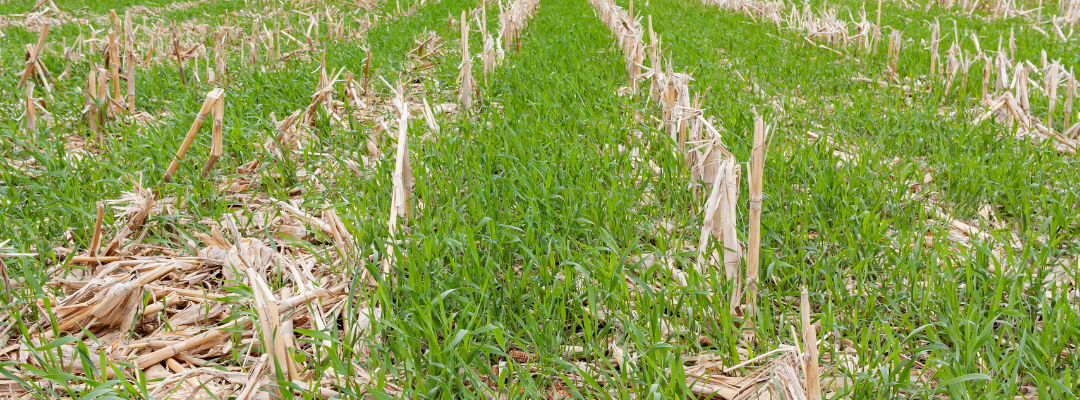
Cover crops are plants typically grown by farmers to improve soil health, help with carbon sequestration, weed suppression, and reduce erosion. Unlike cash crops, cover crops are not intended to be sold for a profit, but rather, to serve as a natural complement to the production of cash crops (typically corn and soybeans). As such, cover crops are normally planted between the growing seasons of the cash crops, which is usually during the winter. The most common types of cover crops are legumes, grasses, and brassicas.
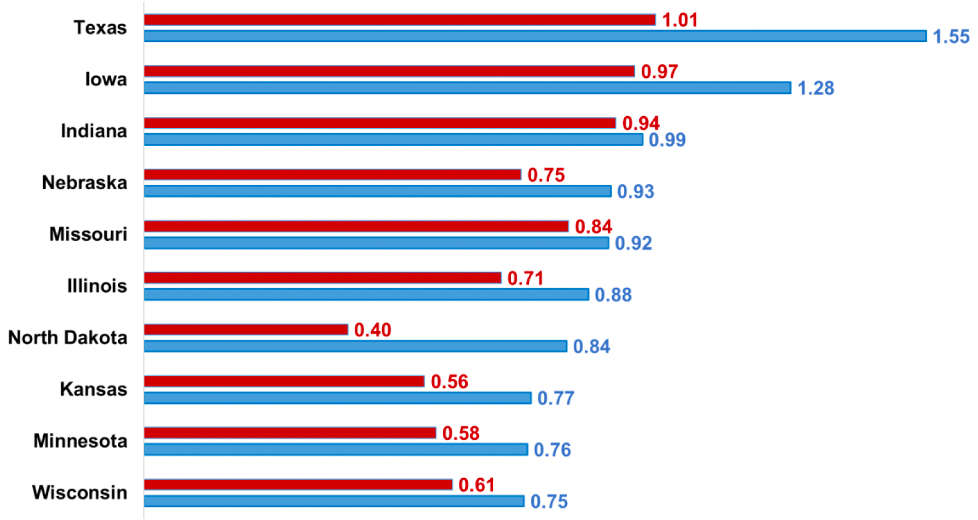
Despite the well-known soil benefits of planting cover crops, their use across the country remains relatively low at less than 5% of total cropland (Bowman and Morales, 2024). However, significant variation in relative use is seen across the US territory. Figure 1 shows the spatial (county-level) distribution of cover crop planting based on data from the 2022 Census of Agriculture. Darker tones indicate a higher percentage of cover crop use. As seen in the graph, cover crops are relatively more common in the South and the Northeast than in the Midwest, reflecting both managerial decisions and weather factors that facilitate their planting. However, in absolute terms (given by the total number of acres planted with cover crops), none of the top ten states relying on this so-called “climate smart” practice are in the Southeast or Mid Atlantic (Table 1). Texas leads with 1.55 million acres, followed by Iowa, Indiana, Nebraska, and Missouri. All states in the list experienced an increase in the number of acres with cover crops between 2017 and 2022.
Despite the agronomic benefits associated with cover crops, their use remains limited largely due to the costs of planting the crops, terminating them in a timely manner, the labor involved in these tasks, and the potential negative impact on the yield of the following cash crop. Moreover, the benefits to the soil are generally experienced after two or more years, rendering their financial impact negative over short periods of time. For this reason, federal programs run by the USDA generally offer monetary support to encourage the use of cover crops. Importantly, recent research by Gutierrez-Li and Rejesus (2026) finds evidence that cover crops (if planted for several years and in a large enough area) can help reduce pesticide use, likely by fostering the development of natural predators that aid in pest control. Their work suggests that the benefits of planting cover crops are likely broader and not limited to enhancing soil quality.
For farmers considering implementing this practice, several considerations ought to be made. First, a clear determination of the short-term costs, such as seed, termination, additional input requirements for the subsequent cash crop (e.g., additional nitrogen), and yield loss of the cash crop. Second, an estimation of the savings associated with a lower need for fertilizers and pesticides over the long run. Third, the specific combination of species that will maximize the benefits to the cash crops and align with their growing seasons. Starting small, as well as talking to other local farmers and Extension agents with knowledge on cover crops, can prove essential for learning about the opportunities associated with this planting practice.
Figure 1. Cover Crops as a Percent of Total Cropland: 2022
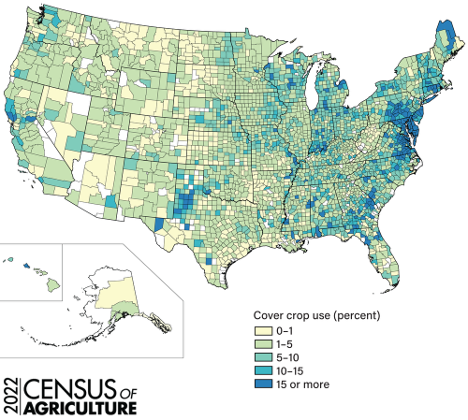
Figure 2. Top 10 States in Cover Crop Use: Millions of Acres in 2017 and 2022
References
Bowman, M. and Morales, M. (2024). 2022 Census of Agriculture: Cover Crop use Continues to be Most Common in Eastern United States. Charts of Note. Economic Research Service. U.S. Department of Agriculture.
Gutierrez-Li, A. and Rejesus. R. (2026). Cover Crops and Pesticide Use. Unpublished manuscript. North Carolina State University.
Zurlauf, C. (2024). Cover Crops and Covered Cropland, 2022 US Census of Agriculture. Farmdoc Daily (14): 37. University of Illinois at Urbana-Champaign
Gutiérrez-Li, Alejandro. “Cover Crops in the United States: Trends, Benefits, and Considerations for Farmers.” Southern Ag Today 6(23.1). June 1, 2026. Permalink
