Authors: Josh Maples and David Anderson
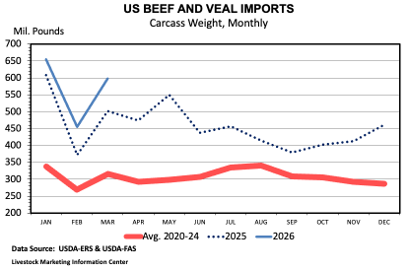
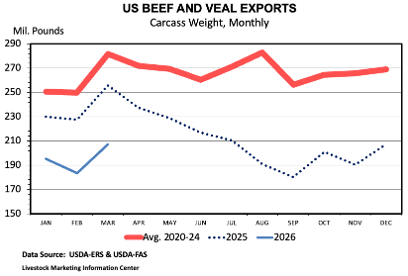
Through the first quarter of 2026, the U.S. imported 1.7 billion pounds of beef, which is up more than 15 percent from the same period last year. Beef exports fell nearly 18 percent to 586 million pounds. Both trends reflect the tight U.S. cattle herd and high domestic beef prices.
South Korea and Japan together accounted for nearly half of all U.S. beef exports but have both declined, down 7 percent and 17 percent, respectively. Mexico and Canada, the third and fourth largest destinations, each declined around 8 percent, while Taiwan was the lone increase among major markets, up nearly 8 percent. Exports to China during the first three months of 2026 totaled only 5.3 million pounds, down 95 percent from a year ago and a dramatic reversal from recent years when China was among the top U.S. beef markets.
On the import side, the U.S. imported 1.7 billion pounds through the first quarter, up 15.3 percent year over year. Brazil leads all import sources with 394 million pounds, up 8 percent. The majority of those shipments entered at the higher out-of-quota tariff rate of 26.4 percent after the “Other Countries” annual quota was filled within the first week of 2026. Australia posted a 12 percent gain to 334 million pounds. The largest gain among major suppliers came from Mexico, up 23 percent to 197 million pounds. It’s likely that some increase in beef imports from Mexico are due to the border closure to feeder cattle, leading to increased beef production in Mexico, boosting their exportable supplies. Argentina ranked sixth among suppliers at 3.6 percent of total imports despite shipments nearly doubling year over year.
USDA currently projects 2026 will set another annual import record. Tight domestic cattle supplies and strong beef demand are expected to keep imports elevated and exports under pressure well into 2026. The May 11thannouncement of suspension of the tariff rate quotas for beef, effectively reducing import tariff levels, could lead to even higher beef import totals. It’s worth remembering that the majority of beef imports are lean beef trimmings for ground beef so any potential impacts of more imports due to TRQ related tariffs would fall on trimmings and cull cow markets. But, even then, price impacts are expected to be limited.
Maples, Josh, and David Anderson. “U.S. Beef Imports Hit Record Pace as Exports Drop.” Southern Ag Today 6(20.2). May 12, 2026. Permalink
