In recent years, producers have faced repeated shocks to fertilizer markets because of events such as the Russia-Ukraine conflict and, more recently, the conflict involving Iran. These events have disrupted key markets affecting fertilizer and energy supplies, impacting trade routes and contributing to increased price volatility and supply uncertainty. However, the idea of discussing “fertilizer markets” means more than focusing on a single product with a single supply chain. Nitrogen, phosphate, and potassium (potash) are three major nutrients used for plant growth that each have a different production process, geographic concentration, and trade pattern. Nitrogen fertilizers are closely tied to natural gas and energy markets, while phosphate and potash are mined products concentrated in a relatively small number of countries. As a result, geopolitical disruptions can affect each nutrient differently and create unique risks for global fertilizer markets.
Nitrogen is the first essential plant nutrient that is commercially recovered from the atmosphere as ammonia, which is produced by combining atmospheric nitrogen with hydrogen derived from natural gas. Ammonia can then be converted into other nitrogen fertilizers such as urea, ammonium nitrate, and ammonium sulfate. Among the major fertilizer nutrients, nitrogen is the most closely tied to energy markets because natural gas is a key input in the production process.
Globally, China is the largest producer of nitrogen fertilizer (in the form of ammonia), accounting for 31% of global production in 2025 (Figure 1). India, Russia, and the United States (U.S.) are also major producers, each accounting for approximately 9% of production. Persian Gulf countries, including Iran, Saudi Arabia, and Oman, are another significant production region, collectively accounting for roughly 9% of global ammonia production. These countries also account for a substantial share of global nitrogen fertilizer exports, especially to India. As a result, the Strait of Hormuz serves as a critical shipping route for global fertilizer trade. Any disruption to traffic through the Strait has the potential to significantly impact global nitrogen markets, increase transportation costs, and contribute to nitrogen price volatility worldwide.
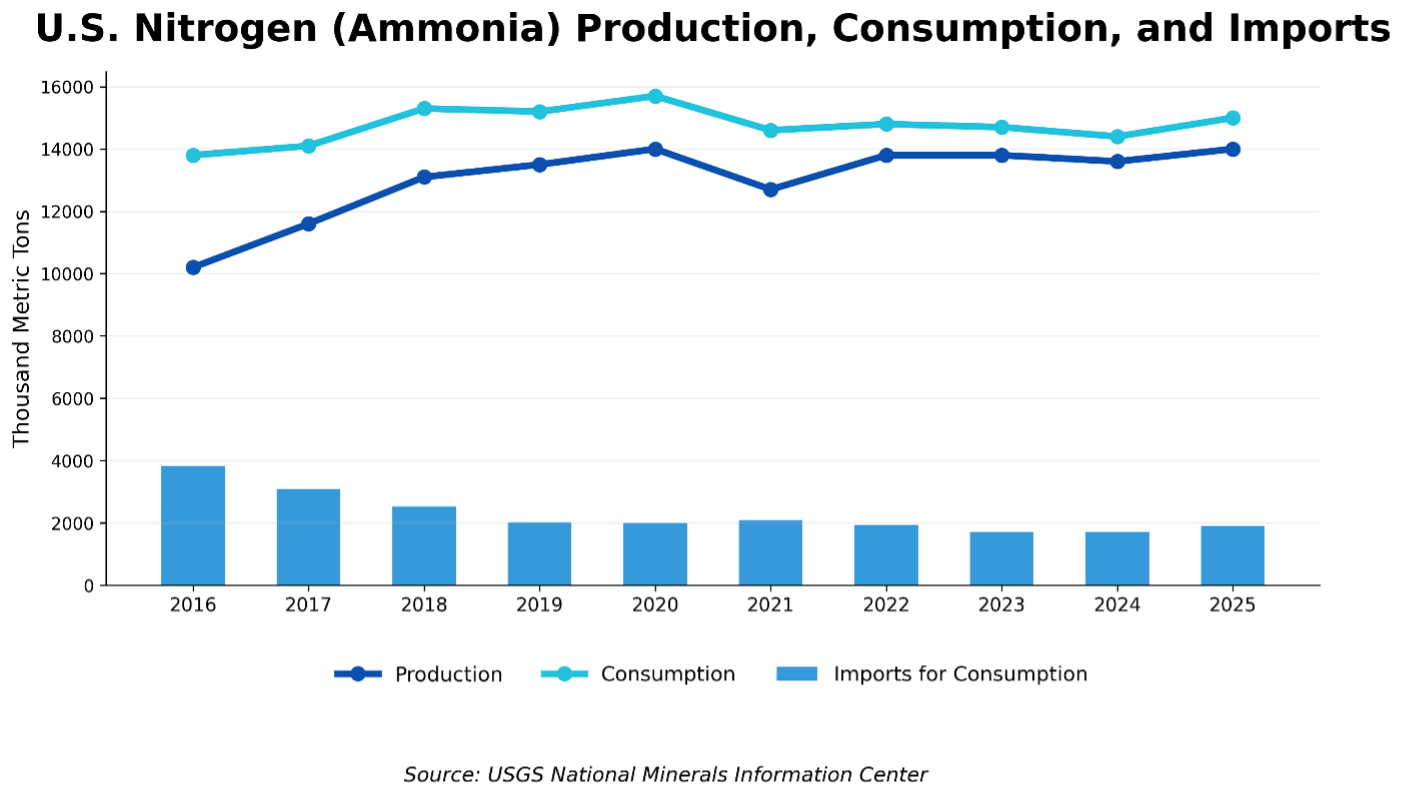
While the U.S. relies on some nitrogen imports, domestic production has accounted for an average of 95% of U.S. nitrogen consumption over the last five years (Figure 2). Over the past decade, the U.S. has increased nitrogen production and reduced its reliance on imports. From 2021 through 2024, Canada accounted for 49% of U.S. nitrogen imports, while Trinidad and Tobago accounted for 47%. Ammonia production in Trinidad and Tobago has seen declines though over the past decade, primarily due to issues with the supply of natural gas. In October 2025, Nutrien announced a controlled shutdown of its nitrogen operations at the Point Lisas Industrial Estate, one of the country’s major ammonia production facilities that accounted for approximately 31% of the nation’s production (EnergyNow, 2025). Because Trinidad and Tobago is a key supplier of nitrogen fertilizer to the U.S., prolonged disruptions could tighten available supplies and increase U.S. reliance on alternative import sources.
Phosphorus is the second essential nutrient for plant growth, with a primary commercial source of phosphate rock. Thus, phosphate production depends on geographically concentrated mineral deposits and more limited global reserves. In 2025, China accounted for the largest share of global phosphate rock production at 44%, followed by Morocco, the U.S., and Russia. Although China is the leading producer, Morocco holds the world’s largest phosphate rock reserves, accounting for an estimated 68% of global reserves. This concentration of reserves gives Morocco an important role in long-term global phosphate supply.
In the U.S., phosphate rock is mined by five companies operating ten mines located in Florida, Idaho, North Carolina, and Utah (USGS, 2026). The U.S. produces most of the phosphate it consumes, although it still imports some phosphate materials, particularly from Peru.
Potassium is the third major nutrient essential for plant growth and is primarily supplied through potash fertilizers. Potash production is concentrated in a relatively small number of countries with economically recoverable deposits. Canada, Russia, and Belarus collectively account for approximately 63% of global potash production, making the global potash market particularly vulnerable to geopolitical disruptions and trade restrictions. Sanctions and trade disruptions involving Belarus and Russia have contributed to recent volatility in global potash prices and fertilizer availability.
The U.S. has limited domestic potash production and relies heavily on imports to meet domestic demand, with more than 90% of annual consumption supplied by imports. Canada accounts for the vast majority of these imports because of its large production capacity and geographic proximity to U.S. markets. The U.S. has also historically imported potash from Russia, although those trade flows have become more uncertain in recent years because of geopolitical tensions and sanctions.
Overall, fertilizer markets remain highly dependent on a relatively small number of producing regions and key global trade routes. Because nitrogen, phosphate, and potash each rely on different raw materials and supply chains, geopolitical disruptions can affect fertilizer availability and prices in different ways. While the U.S. produces much of its nitrogen and phosphate domestically, it remains heavily dependent on imports for potash and still relies on global trade for portions of all its fertilizer needs. As a result, uncertainty from global conflicts, trade disruptions, and energy market volatility will continue to play an important role in fertilizer markets and producer input costs. As part of a broader marketing plan, producers should consider how to best determine crop pricing strategies to insulate their operation from unexpected changes in key input markets.
Figure 1. Top Producing Countries of Plant Nutrients in 2025
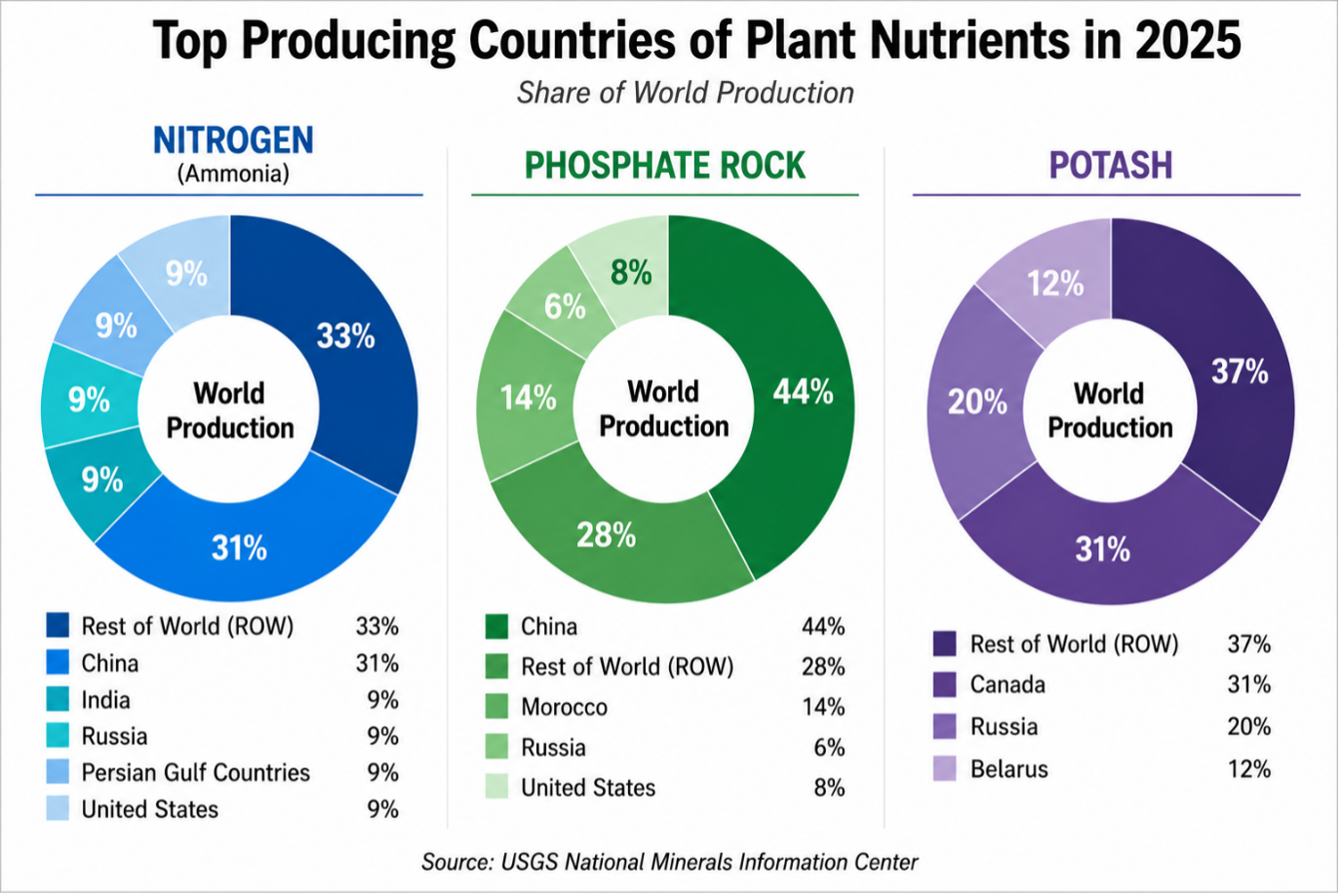
Figure 2. U.S. Nitrogen (Ammonia) Production, Consumption, and Imports
Sources
EnergyNow. (2025). Ammonia production and export in T&T face significant challenges.https://energynow.tt/blog/ammonia-production-and-export-in-tampt-face-significant-challenges. Accessed 28 May 2026.
U.S. Geological Survey. Mineral Commodity Summaries 2026. Nitrogen (Fixed)—Ammonia, Phosphate Rock, and Potash chapters. Reston, VA: U.S. Geological Survey, 2026.
Maples, William E. “Understanding Global Fertilizer Markets.” Southern Ag Today 6(23.3). June 3, 2026. Permalink
