Hurricanes and tropical storms can damage crops through strong winds and excessive rainfall. Yield Protection and Revenue Protection may pay indemnities when covered causes of loss reduce yield or revenue below the policy guarantee, but producers retain a deductible based on their selected coverage level. Hurricane Insurance Protection–Wind Index (HIP-WI) is an optional endorsement covering part of that deductible for an additional premium. For example, producers with a 75% underlying coverage level and no other coverage for the deductible can insure up to 20% of expected crop value—the difference between 75% and 95%. The dollar amount of HIP-WI coverage is called the Hurricane Protection Amount. The 2025 One Big Beautiful Bill Act increased HIP-WI’s premium subsidy from 65% to 80%, reducing the standard producer-paid share of the premium from 35% to 20%.
This additional protection works differently from the underlying policy: HIP-WI payments depend on county-level weather conditions rather than farm-level losses. For hurricane coverage, USDA’s Risk Management Agency (RMA) uses official wind data to determine whether the insured county or an adjacent county intersects a named hurricane’s designated wind area, defined by sustained winds of at least 64 knots (74 mph). Producers with eligible HIP-WI coverage can receive a payment if this occurs during the coverage period. This means that producers may receive payments with little farm damage or suffer losses without a HIP-WI payment. This potential mismatch is called basis risk.
Producers can add the Tropical Storm Option to HIP-WI for an additional premium. The option pays half the Hurricane Protection Amount when RMA identifies a qualifying tropical-storm event in the insured county or an adjacent county. To qualify, that county must meet the 34-knot (39 mph) sustained-wind criterion and receive at least 5.9 inches of county-average rainfall during the specified storm window, as determined by RMA using official National Oceanic and Atmospheric Administration (NOAA) data. Combined hurricane and tropical-storm payments cannot exceed the applicable Hurricane Protection Amount.
Participation has grown, but indemnity payments have fluctuated. RMA’s Summary of Business shows that the number of policies earning premium roughly doubled from 2020 to 2025, while total premium more than quadrupled from about $107 million to $451 million (Figure 1). The national loss ratio—indemnities divided by total premium—varied across years: it was 1.77 in 2020 and 1.98 in 2024 and remained below 1.0 in the other four years.
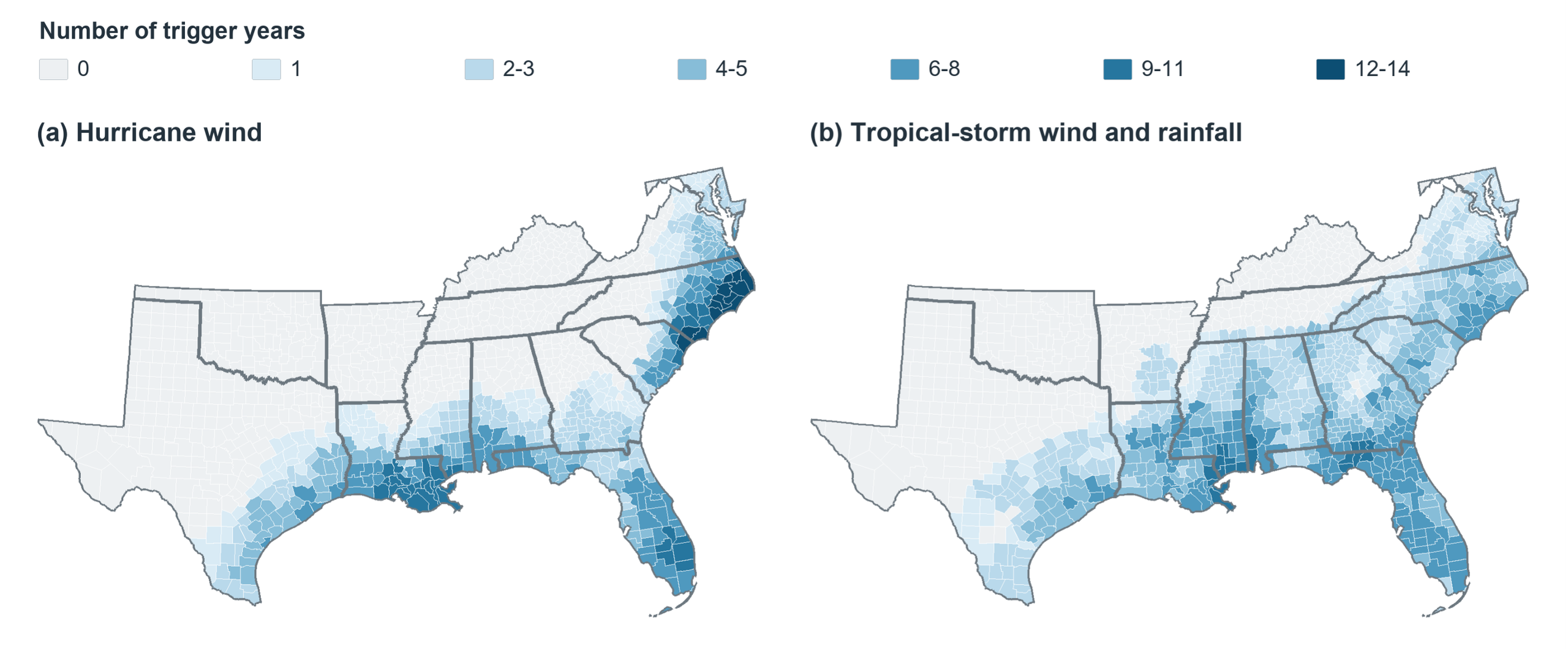
These six crop years provide only a short history. RMA’s historical workbooks offer a longer perspective by applying its trigger methodology to archived weather data. Figure 2 shows the number of years in which each county would have met the trigger criteria during 1991–2024. Hurricane triggers were most frequent near the Gulf and Atlantic coasts, while tropical-storm triggers extended farther into the lower Mississippi Valley and Southeast. Producers can compare the historical records for their county with storms that caused losses on their farms. Considering this history alongside HIP-WI’s premium and protection amount can help producers assess whether the coverage fits their insurance needs.
Figure 1. HIP-WI premiums and indemnities, crop years 2020–2025
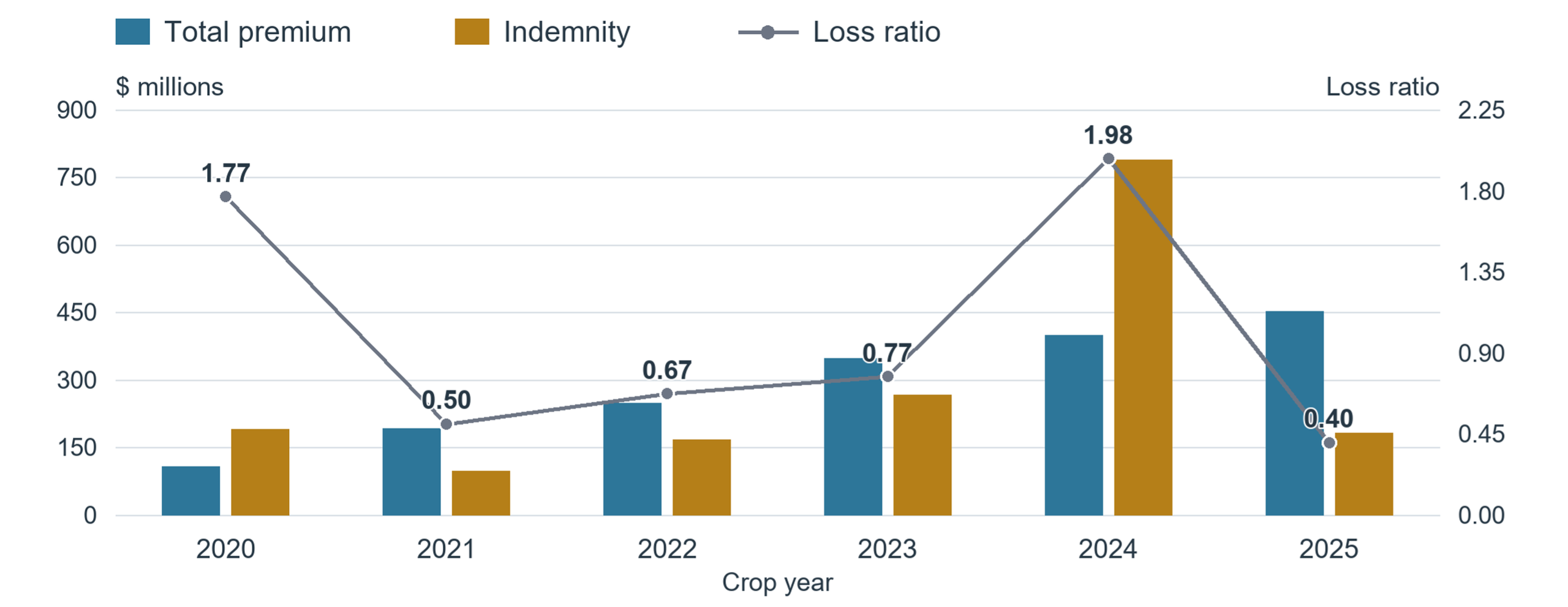
Figure 2. Retrospective county trigger indications in Southern Ag Today states, 1991–2024
Recommended citation format: Lee, Seunghyun. “HIP-WI Basics and Trends.” Southern Ag Today 6(40.4). October 1, 2026. Permalink
